
Cars leave the UAE every day, for Africa, Asia, Europe and the rest of the GCC. Buyers abroad want them because the market here is large, prices are competitive, and a GCC-spec car with a full service history is easy to sell on. Whether you are relocating with your own car or trading vehicles for export, the process is manageable once you know what has to happen in what order.
We have been buying, selling and exporting used cars from the UAE since 2018, so what follows is the process as it actually runs, including the things that stop a car at the last step.
The Short Version
- The car has to be clear before it can leave. Any bank mortgage must be released, and any fines, Salik or Darb charges, legal cases or impound must be cleared. The export certificate will not be issued otherwise.
- The export certificate deregisters the car. It is issued by the registering authority, RTA for Dubai, and it is what customs need to let the vehicle out.
- Export sales can be zero-rated for VAT. If the car leaves the UAE within 90 days with proof of export, no VAT is charged on the sale. Miss the window or the paperwork and 5% is due.
- Shipping is the buyer's or shipper's cost, and the choice is between price and protection. Roll-on roll-off is cheapest, a container is safest, air is fastest.
Why Cars Are Exported from the UAE
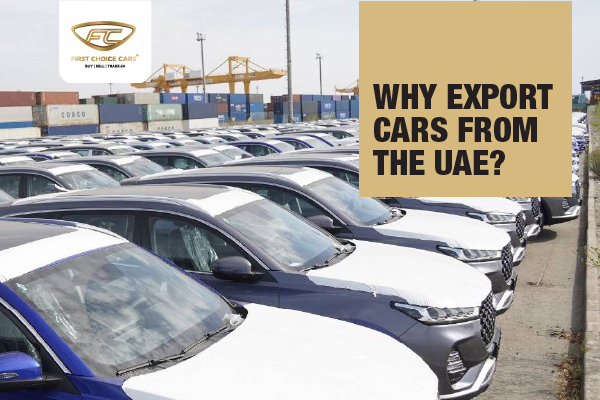
The UAE is one of the largest used car markets in the region, with a steady supply of vehicles that have been serviced by the agency, driven on good roads and kept in GCC specification. For a buyer in Africa or South Asia that combination is hard to find at home. For a buyer in Europe it is the availability of models and specifications that were never sold there. The result is a permanent export trade, with cars leaving through Jebel Ali and the land borders every day.
Before You Start: What Blocks an Export
An export certificate is issued only for a car with a clean record. The same things that stop a domestic ownership transfer stop an export, and they are worth checking before anything else, because most of them take longer to fix than the export itself.
- Bank mortgage. A financed car cannot be exported until the loan is settled and the bank has released the mortgage. The release is electronic at major UAE lenders. Ask your bank for a settlement letter, settle against it, then request the release. The full process is in our guide to selling a car with an outstanding loan.
- Traffic fines, from any emirate. Every fine on the vehicle has to be paid, including fines registered outside Dubai. A car driven between emirates can carry fines the owner never sees on the Dubai system.
- Salik and Darb fines. Passing a toll gate without sufficient balance generates a fine, and the fine blocks the export. Topping up the account afterwards does not clear it.
- A legal case against the vehicle. An unresolved accident case or any other case registered against the car stops the export until it is closed.
- An impounded vehicle. Cannot be exported until it is released.
- Expired registration. This does not block the export by itself, but the non-renewal fine has to be paid.
Documents Required to Export a Car from the UAE
- Emirates ID and passport of the registered owner, original and copy
- Original vehicle registration card (Mulkiya)
- Mortgage clearance letter from the bank, if the car was financed and the mortgage has been released
- Export inspection pass certificate from the vehicle testing centre
- Export insurance certificate, covering the vehicle for the journey
- Consignee details for the shipping documents: the name and identity document of the person or company receiving the car
Have all of these before you book anything. A missing document at the traffic centre is the most common reason an export slips by a week.
How to Export a Car from Dubai, Step by Step
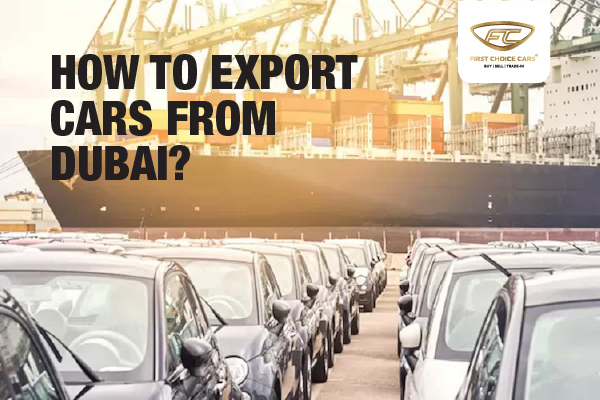
This is the Dubai process, which runs through RTA. Other emirates issue export certificates through their own registering authority. A Sharjah-registered car, for example, gets its certificate from the Sharjah traffic authority. The steps are the same in shape.
1. Clear the blockers and gather the documents
Everything in the two sections above. If the car is financed, start with the bank, because the mortgage release is the step you cannot hurry.
2. Pass the export inspection
The car goes through a technical inspection at an approved vehicle testing centre. This is a safety check, not a condition grade; a car with cosmetic wear passes, a car with a structural or safety fault does not.
3. Obtain the export certificate from RTA
Apply through the RTA website or app, at a Customer Happiness Centre, or at an approved vehicle registration centre such as Tasjeel or Shamil. RTA cancels the UAE registration and issues the vehicle export certificate. Export plates are issued at the same time if the car will be driven to a land border rather than shipped.
4. Clear customs
Submit the export certificate and the shipping documents to Dubai Customs, pay the customs fee, and the vehicle is cleared to leave.
5. Choose the shipping method
- Roll-on roll-off. The car is driven onto the vessel. Cheapest, and the car is exposed to weather during the voyage.
- Container. The car is loaded into a sealed container. More expensive, and the right choice for a luxury or classic vehicle.
- Air freight. Fastest and most expensive. Used for high value cars or when the timeline is fixed.
6. Prepare the vehicle
Clean it, remove everything personal, and photograph it from every angle with the odometer visible. That record is your evidence if the car arrives with damage it did not leave with.
7. Choose the shipping company
Use one that exports vehicles from the UAE regularly, handles the customs side, and gives you a written price breakdown before you commit. A quote that leaves out port handling, insurance or destination charges is not a quote.
8. Import at the destination
Duties, taxes, inspection and local registration are the receiving country's process and usually the buyer's job. Some countries require additional testing on import; check the rules for the specific destination before the car ships, not after.
The Export Certificate
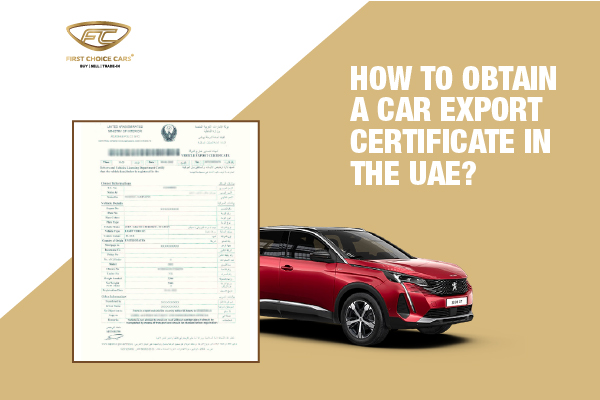
The export certificate cancels the car's UAE registration and records that it is leaving the country. Customs will not release a vehicle without it, and it is the document the destination country uses to accept the car for import. It is not an ownership transfer; the car is deregistered, not transferred.
At the time of writing RTA charges AED 100 for a light vehicle plus a knowledge fee, and the fee for motorcycles and other equipment is listed separately. Fees change, so confirm the current amount on the RTA website before you go.
Do You Pay VAT on an Export Sale?
Usually not, provided the export is done properly. A car sold for export from the UAE is zero-rated for VAT if it physically leaves the country within 90 days of the date of supply and the seller holds proof of export: the customs declaration and commercial evidence such as the bill of lading or airway bill. If the car does not leave within 90 days, or the evidence is incomplete, the sale is treated as a normal domestic supply and 5% VAT is due.
The zero rating is on the UAE side only. Import duty and VAT in the destination country still apply. Our guide to VAT for car buyers in the UAE covers the export conditions, the evidence required, and what happens if the deadline is missed.
How Long Does Shipping Take?
It depends on the route and the method. A container or roll-on roll-off shipment to Europe typically takes 30 to 50 days door to door. Shipments to Pakistan or India are much shorter because of the distance. Air freight is a matter of days anywhere. Treat these as a range rather than a promise, and get the timeline from the shipping company in writing.
Exporting with First Choice Cars
First Choice Cars buys cars from owners who are leaving the UAE, and sells GCC-spec vehicles to buyers overseas. We have done both since 2018.
For an export sale, we obtain the export certificate that deregisters the car and puts it on export plates. Our stock is registered in Sharjah, so that certificate comes from the Sharjah traffic authority rather than RTA; the document and its purpose are the same. From there the process depends on how the car leaves. A buyer driving to another GCC country clears customs at the border themselves. A buyer shipping the car uses the shipping line, which handles the customs exit. We do not ship vehicles ourselves, but we help buyers find a competitive shipping rate.
Export sales are invoiced at zero VAT, provided the vehicle leaves the UAE within 90 days. We hold the export evidence to support the zero rating, so the buyer pays no UAE VAT on the purchase.
Frequently Asked Questions
Can I export a car that still has a bank loan on it?
No. The loan has to be settled and the bank has to release the mortgage before an export certificate will be issued.
Do I need to pay my fines before exporting?
Yes, including fines from other emirates and any Salik or Darb fines. The export certificate is not issued while any of them is outstanding.
Is the export certificate the same as an ownership transfer?
No. The export certificate deregisters the car from the UAE. Ownership transfer is a separate transaction between two UAE owners.
Is VAT charged on a car sold for export?
For a VAT-registered seller, not if the car leaves the UAE within 90 days and the seller holds proof of export. Otherwise 5% VAT is due on the sale. A sale by a private individual who is not registered and not required to register for VAT is outside the scope of VAT.
Does the car need an inspection before export?
Yes, an export inspection at an approved vehicle testing centre. Some destination countries require further testing on arrival.
Can I drive the car out instead of shipping it?
To a land border, yes, on export plates issued with the export certificate. The receiving country's import process still applies.
Exporting Without the Delays
Most exports that stall do so at the first step, not the last: a mortgage not released, a fine nobody knew about, a document left at home. Clear the car first, gather the papers, and the certificate, customs and shipping run in order. If you would rather sell the car to a dealer who exports, or you are an overseas buyer looking for GCC-spec stock, start with a valuation or contact our team.
Sources
- Roads and Transport Authority, Dubai, vehicle export certificate service
- Dubai Customs, vehicle export clearance
- Federal Tax Authority, zero-rating of exported goods under UAE VAT
Disclaimer: All information, including pricing, vehicle details, and legal requirements, is accurate at the time of publication but may be subject to change due to market conditions or policy updates. While First Choice Cars makes every effort to ensure the accuracy of the information provided, we hold no responsibility for any errors, omissions, or outdated content. We recommend contacting our team directly to confirm the latest details before making any decisions.