
Buying used cars in Sharjah and across the UAE is not always straightforward. From the outside, a car can look spotless: clean paint, a tidy interior, and decent tyres. But what's underneath that surface is what really matters, and that's not always easy to see unless you know exactly what to look for.
Hidden accident damage, inconsistent mileage, worn mechanical parts, and electrical faults are genuine concerns that used car buyers face. And in most cases, they only surface after the purchase has already been made.
That's why what happens before a vehicle is listed for sale matters just as much as the vehicle itself. First Choice Cars has been operating in Sharjah since 2018 and puts every vehicle through a detailed, multi-step inspection before making it available to buyers. The process is built around one straightforward principle: a buyer should know exactly what they're getting before they commit. This article walks through what that inspection looks like, step by step.
Why We Inspect Every Vehicle Before Listing
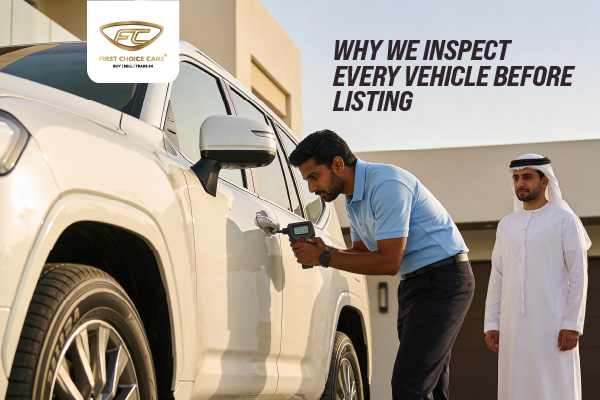
A dealership's standing in the market is built one car at a time. Every vehicle that goes on sale either holds up or chips away at the trust buyers place in that business.
First Choice Cars has been part of the UAE used car market since 2018. Staying in business requires consistently delivering vehicles that are safe, accurately described, and worth what the buyer is paying. The inspection process is what makes that possible.
The inspection process plays an important role in that commitment. It helps verify vehicle condition, identify potential concerns, and provide buyers with greater confidence when making a purchase decision.
There are three core reasons every vehicle is inspected before listing.
- Buyer Protection: Used vehicles can come with an unknown history. A thorough inspection helps identify potential concerns before a vehicle reaches a buyer, reducing the likelihood of unexpected surprises after purchase.
- Accountability: The second is accountability. A dealership that skips the inspection process is passing the risk onto the customer. The inspection is how responsibility is taken for what goes on sale.
- Safety: The third is safety. The UAE's road network includes some of the busiest highways in the region. A vehicle that hasn't been properly evaluated for roadworthiness doesn't belong on those roads.
Why Vehicle Inspections Matter in the UAE
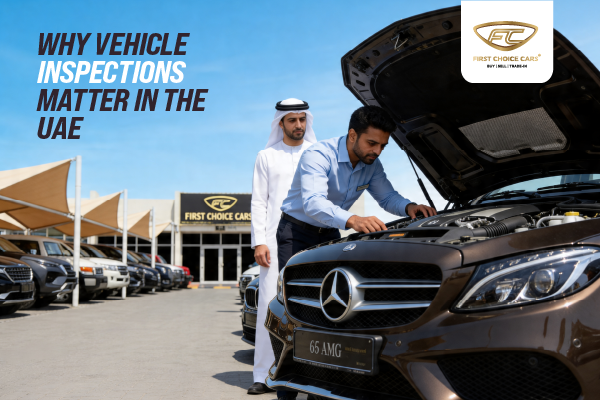
Buying a used car in the UAE comes with considerations that may not be as significant in other markets. Climate, driving conditions, and vehicle sourcing all play a role in determining a car's long-term reliability. That's why a thorough inspection process is particularly important.
High Temperatures Put Extra Stress on Vehicles
The UAE's hot climate can affect several critical vehicle components, including the engine, cooling system, battery, hoses, and fluids. Prolonged exposure to extreme temperatures may accelerate wear and increase the risk of mechanical issues if a vehicle hasn't been properly maintained.
Air Conditioning Is Essential, Not Optional
In the UAE, air conditioning is a necessity for comfortable daily driving. Even minor AC issues can become major inconveniences during the summer months. That's why air conditioning performance is carefully tested as part of the inspection process.
Long-Distance Highway Driving Creates Wear
Many vehicles in the UAE regularly travel between emirates on high-speed highways. Over time, this can place additional strain on tyres, suspension components, brakes, and steering systems. A detailed inspection helps identify wear that may not be obvious during a visual check alone.
Imported Vehicles Require Additional Verification
The UAE market includes both locally registered and imported vehicles. While imported vehicles can offer excellent value, it's important to verify their history, condition, and maintenance records wherever possible. Proper documentation and inspection help reduce uncertainty for buyers.
Dust, Sand, and Desert Conditions Can Affect Vehicle Condition
Environmental factors such as dust, sand, and occasional desert driving can impact air filters, cooling systems, paintwork, and other components. These conditions make regular inspections especially important when assessing a used vehicle's overall condition.
Why This Matters for Buyers
A vehicle may look clean and well-maintained on the surface, but the real test is how it performs under UAE driving conditions. A structured inspection process helps identify potential concerns before a vehicle is listed, giving buyers greater confidence and helping them make a more informed purchasing decision.
The 5-Step Inspection Process at First Choice Cars
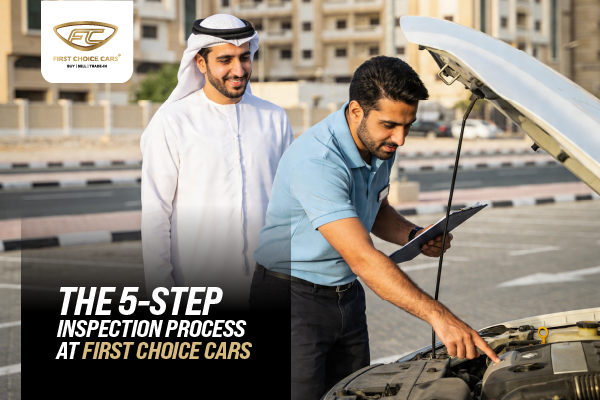
Every vehicle that enters First Choice Cars goes through a fixed, five-step inspection before it's considered for listing. Here's exactly what that process covers.
Step 1: Vehicle History & Documentation Check
Before the car is even physically looked at, the paperwork comes first. Getting the documents right at this stage prevents bigger complications further down the line.
Registration documents are reviewed to confirm the vehicle's legal standing. Ownership is verified to make sure the person selling the car has the right to do so. This step also flags any outstanding traffic fines or unresolved loan settlements that could cause problems during the ownership transfer process.
Accident history is one of the most important things to check. Accident history is checked through available UAE vehicle history databases and official records, where applicable. Buyers can also use the RTA's official vehicle enquiry service to check a vehicle's status independently before making a purchase decision.
Service history is reviewed wherever records are available. A car with a consistent, documented maintenance record is a far more reliable choice than one with gaps or missing entries. If service history is incomplete, it doesn't automatically rule a vehicle out, but it does mean the mechanical inspection that follows is carried out with extra care.
Step 2: Exterior Inspection
Once the documents are cleared, attention moves to the physical condition of the vehicle, starting from the outside. What's visible on the surface can often point to what the car has been through.
Every body panel is checked carefully. Inspectors look for dents, scratches, signs of rust, and evidence of repainting. Uneven panel gaps, colour mismatches between sections of the car, or overspray around rubber trims are all indicators that bodywork may have been carried out after an accident.
Glass is checked for chips, cracks, and proper sealing around the edges. All lights ,headlights, taillights, indicators, reverse lights, and fog lamps , are tested to confirm they're functioning correctly. Mirrors are checked for damage and proper adjustment.
Tyre condition is assessed at this stage too. Uneven tread wear is more than just a tyre issue; it often points to underlying alignment or suspension problems. A tyre worn heavily on one side but not the other is worth investigating before anything else.
Step 3: Interior Inspection
The interior of a car reflects how it was used, and sometimes it tells a very different story from the odometer reading. This step looks beyond the surface to find anything that doesn't quite add up.
Seats and upholstery are checked for wear, tears, stains, and damage. A driver's seat showing heavy wear on a car claiming low mileage is a flag worth paying attention to.
Dashboard warning lights are tested by starting the engine and observing what happens. All lights should come on briefly at ignition and then switch off; that's normal. Any warning light that stays on after startup is investigated. Whether it's the engine management light, ABS warning, airbag indicator, or anything else, it gets looked into rather than noted and ignored.
The air conditioning system is thoroughly tested. In the UAE, this is not a minor point. A faulty AC in this climate is a real problem, and not one a buyer should discover only after driving the car home.
All electronics and infotainment features are also checked: touchscreen functions, Bluetooth, USB ports, power windows, central locking, and anything else built into the vehicle. If a feature is in the car's spec sheet, it should be working.
Step 4: Mechanical Inspection
This is the most technical part of the process, and it's also where the most serious hidden issues tend to appear. A car that looks and feels fine can still carry problems that only a proper mechanical check will catch.
The engine is inspected for leaks, unusual sounds, and overall condition. Oil quality, coolant levels, drive belts, and other key components are all checked. An engine that has been neglected or poorly repaired is one of the more expensive problems a buyer can inherit.
Transmission performance is evaluated by checking how cleanly the gearbox shifts in both automatic and manual vehicles. Hesitation, slipping, or unusual sounds during gear changes are all treated as warning signs.
Suspension and steering are tested for worn components, including bushings, ball joints, and shock absorbers. These directly affect how the vehicle handles, which matters particularly on the mix of city roads and open highways common across the UAE.
The braking system is checked for pad thickness, disc condition, and fluid quality. There is no acceptable level of compromise when it comes to brakes.
Step 5: Road Test Evaluation
A vehicle can pass a static inspection and still reveal issues the moment it's driven. The road test is where everything is confirmed under actual driving conditions.
Engine performance is evaluated in motion: how the car picks up speed, how it responds across different speed ranges, and whether it sounds and feels right under load.
Gear shifting is observed while driving. An automatic gearbox that seems fine in a parking lot may show signs of slipping or hesitation once it's working through the gears on the road.
Braking response is tested to confirm the car stops evenly and in a straight line. Any pulling to one side during braking points to a brake or suspension issue.
Noise and vibration checks are done throughout the test drive. Rattles, knocking sounds, vibrations in the steering wheel, or sounds that appear only at certain speeds are all noted and investigated before a listing decision is made.
Common Reasons a Vehicle May Not Be Listed

Not every vehicle that comes in gets listed. Some don't meet the required standard and are either declined or held until the issue is properly resolved.
Major Accident Damage
Structural damage is one of the most serious issues a vehicle can have, and it's not something that bodywork repairs can fully address. A car's ability to protect occupants in an emergency depends on its frame being intact.
A vehicle with significant chassis or frame damage may seem to drive fine under normal conditions, but can behave unpredictably when it counts. This is treated as a firm reason for rejection.
Chassis Issues
The chassis is the core structure of the vehicle; everything else is built around it. Once it has been seriously compromised, there is no surface-level fix that restores it to a safe condition.
Vehicles with confirmed chassis damage are not listed. It doesn't matter how the rest of the car presents; structural integrity is not negotiable.
Odometer Discrepancies
Mileage is one of the first things a buyer looks at, which also makes it one of the more frequently manipulated figures on a used car. Any gap between the recorded figure and the actual condition of the vehicle is treated as a concern.
Odometer readings are reviewed against available service records, inspection reports, and vehicle history data where available. If the numbers don't match what the physical wear suggests, that discrepancy gets investigated properly.
Serious Mechanical Faults
Some mechanical problems go beyond normal wear and make a vehicle unsafe to drive. These aren't issues that can be flagged in the listing and left for the buyer to sort out.
Vehicles with serious mechanical faults are held until proper repairs are completed or declined if the scope of the issues is too significant to address adequately.
Poor Maintenance History
A car's service record reflects how it was looked after. Consistent gaps, skipped intervals, or signs of improper work all suggest a vehicle may have underlying problems that haven't surfaced yet.
Poor maintenance history introduces too much uncertainty. If the records raise more questions than they answer, the vehicle stays off the market until those questions are properly addressed.
What Happens After a Vehicle Passes Inspection
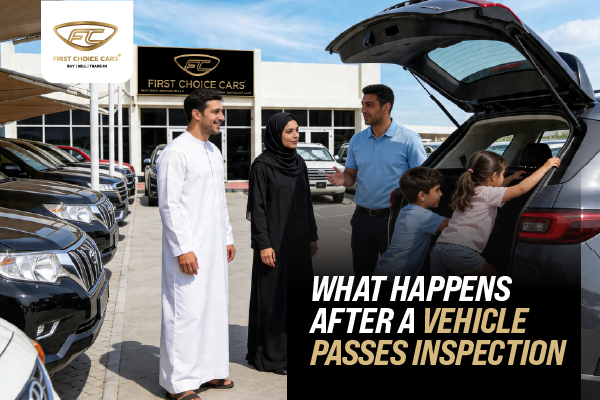 Passing the inspection doesn't mean a car immediately goes on sale. There's still work to be done before a listing goes live.
Required Repairs and Rectifications
Minor issues identified during the inspection are taken care of before the vehicle reaches a buyer. Small things, such as a worn wiper blade, a low fluid level, or a minor cosmetic scratch, are sorted out rather than overlooked.
The aim is to list a vehicle that's genuinely ready to use from day one, not one that comes with a short list of things the new owner needs to deal with straight away.
Final Quality Check
Once any required work is completed, a second review is carried out to confirm the vehicle is in proper order. This isn't a formality; it's a final check before the car is considered ready for sale.
It adds another layer of quality control and helps ensure nothing is overlooked between inspection and listing.
Vehicle Preparation for Sale
With the inspection complete and any issues resolved, the vehicle is prepared for listing. This covers professional cleaning, accurate photography, and a listing with verified mileage, correct specs, and honest pricing.
Every listing on official site of First Choice Cars reflects a vehicle that has gone through this full process, not one that was simply cleaned up and photographed.
Why This Process Benefits Used Car Buyers

Everything described above comes back to what the buyer actually experiences when they purchase a vehicle.
Greater Confidence When Purchasing
When a vehicle has been through a structured inspection before it's listed, buyers don't have to guess about the basics. Engine condition, mileage, AC, and electrics have already been checked. That changes how a buying decision feels.
Instead of hoping the car is what it appears to be, a buyer can look at what has actually been verified and make their choice from there.
Reduced Risk of Unexpected Repairs
Potential concerns are more likely to be identified during the inspection stage before the vehicle reaches a buyer. That's a meaningful difference for the buyer's wallet.
When a proper pre-listing inspection has been done, the chance of running into an unexpected repair bill shortly after purchase is considerably lower.
Better Overall Ownership Experience
A car that was properly checked before sale is more likely to run without issues once it's in the buyer's hands. Starting ownership without inheriting someone else's deferred problems is a straightforward advantage.
That benefit extends beyond the first few weeks; the groundwork laid before purchase tends to carry through the overall experience of owning the vehicle.
Conclusion
The used car market in the UAE offers plenty of choice. What differs between sellers is what happens before a car is put up for sale.
First Choice Cars has been operating in Sharjah since 2018, and the inspection process described above has been part of how they've run throughout that time. It's the work that happens before a listing goes live, not a policy statement added afterwards.
Their trade licence is issued by the Sharjah Economic Development Department (SEDD), and buyers are welcome to arrange an independent inspection at any authorised centre before completing a purchase.
If you're looking for used cars in Sharjah, browse our current inventory of sedans, SUVs, pickup trucks, and commercial vehicles.
Frequently Asked Questions
Does First Choice Cars inspect every vehicle before listing it for sale?
Yes. Every vehicle goes through a full multi-step inspection covering documentation, exterior, interior, mechanical systems, and a road test before it is listed. No car goes live without completing this process.
Can I independently inspect a vehicle before buying from First Choice Cars?
Yes, and it's something buyers are encouraged to do. You can have any vehicle checked at an authorised inspection centre before completing the purchase. The RTA's vehicle inspection page lists authorised centres across the UAE.
How is mileage verified during the inspection?
A diagnostic tool reads the mileage recorded in the car's electronic control modules, which a reset instrument cluster cannot alter. We then cross-check that reading against the dealership service history. Where any inconsistency appears, the vehicle undergoes an RTA technical test to confirm whether the odometer has been altered. Every kilometre reading is guaranteed in writing on the sales receipt.
What happens if a vehicle doesn't pass the inspection?
Vehicles that don't meet the required standard are either declined or held until the identified issues are properly resolved.
Are commercial vehicles inspected through the same process?
Yes. Used commercial vehicles, including vans, pickups, and trucks, go through the same inspection process to confirm they meet roadworthiness and quality standards before being listed for sale.
What documents are reviewed as part of the inspection?
The team reviews registration documents, ownership records, accident history, and available service history. Outstanding traffic fines and unresolved loan settlements are also checked before a vehicle is accepted into the process.
How long has First Choice Cars been in the used car business in the UAE?
First Choice Cars has been operating in Sharjah since 2018. Their trade licence is issued by the Sharjah Economic Development Department (SEDD).
What should I check on my own before visiting First Choice Cars to buy a car?
It helps to shortlist vehicles on firstchoicecars.com before visiting, so you have a clear idea of what you want to look at. You can also run a basic check on any specific vehicle using the RTA's vehicle enquiry service with the plate or chassis number. When you're at the showroom, ask about service history and take your time; there's no pressure to decide on the spot.
Disclaimer:All information, including pricing, vehicle details, and legal requirements, is accurate at the time of publication but may be subject to change due to market conditions or policy updates. While First Choice Cars makes every effort to ensure the accuracy of the information provided, we hold no responsibility for any errors, omissions, or outdated content. We recommend contacting our team directly to confirm the latest details before making any decisions.