
Thousands of UAE buyers save money by purchasing used cars every year. But many discover too late that the cheapest or most attractive option ends up costing far more in repairs, fuel, or unexpected problems. The market is active, the options are endless, and the prices can look very attractive. But for many buyers, the excitement fades quickly, sometimes within the first few weeks of ownership.
The car turns out to be too big for daily city driving. The fuel bill is higher than expected. A repair comes up that costs more than the car is worth. Or the buyer discovers later that the vehicle had a hidden accident history that was never mentioned.
These are real situations that happen all the time. The UAE has one of the most active vehicle markets in the region. According to the Ministry of Interior's official statistics report by Gulf Today, over 801,857 vehicles were registered across the UAE in 2024 alone. Dubai accounts for 484,223 of those registrations. With that many vehicles changing hands, the chances of making rushed or poorly informed decisions are very real.
This article goes through the most common mistakes UAE buyers make when purchasing a used car and how you can avoid them before it's too late.
Buying a Car That Doesn't Match Daily Needs

This is one of the most common reasons UAE buyers regret their purchase, and it's also one of the easiest mistakes to avoid.
A large SUV looks great. It feels powerful on the road and gives you a sense of space and comfort. But if you're driving through Deira, Al Barsha, Karama, or the busy parts of Abu Dhabi every single day, that SUV quickly becomes a problem. Finding parking is harder. Fuel costs go up. Squeezing through tight spots in a multi-storey car park starts to feel like a daily frustration.
The opposite problem is just as common. Some buyers go for a compact, budget-friendly car without thinking about what their life actually looks like. A month later, they realise the car is too small for school runs, too uncomfortable for long weekend drives, or simply not practical for a growing family.
And here's something to think about: the roads are only getting busier. According to official data from Dubai's toll gate operator Salik, as reported by Khaleej Times, the number of active registered vehicles in the UAE reached 4.56 million by June 2025. That was up from 4.17 million just a year earlier. The RTA also confirmed that during daytime hours, the number of vehicles on Dubai roads alone reaches 3.5 million, a 10% increase over just two years.
Buying a car that's too big for city life in this kind of traffic is not a small inconvenience. It becomes a daily frustration. So before you look at any car, write down what your average week looks like. How far do you drive daily? How many people travel with you regularly? Do you need to park in tight spaces? Answer those questions honestly, and you'll save yourself a lot of regret.
Underestimating Maintenance Costs

A lot of UAE buyers focus almost entirely on the purchase price and forget to think about what happens after the car is parked in their home.
European luxury vehicles such as older BMW 5 Series models, Mercedes-Benz E-Class sedans, and Range Rover SUVs can incur expensive repair and servicing costs once the warranty expires.
A single sensor replacement or suspension repair can run into thousands of dirhams. Specialised parts may not be in stock locally, which means delays and even higher costs.
Imported Vehicles Can Create Unexpected Expenses
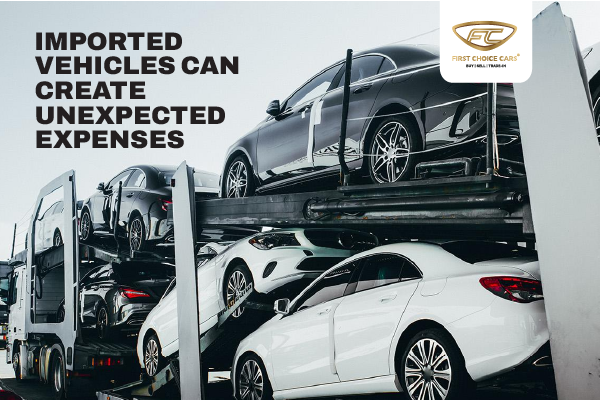
Imported vehicles can sometimes appear cheaper than locally supplied alternatives, but buyers should carefully consider parts availability and repair costs before making a purchase. Certain imported models, particularly those with specifications that differ from those of GCC vehicles, may require parts not commonly stocked by UAE suppliers.
When a component fails, owners may need to order replacement parts from overseas, leading to longer repair times and higher costs. Some workshops may also have limited experience working on less common imported specifications, which can increase labour costs and make diagnostics more difficult.
Before purchasing an imported vehicle, check whether spare parts are readily available in the UAE and whether independent workshops can service the model. A lower purchase price can quickly lose its appeal if routine repairs become expensive or time-consuming.
Many UAE workshops report cooling-system issues as one of the most common causes of expensive repairs in neglected vehicles, particularly during the summer months. Cooling systems work much harder in the UAE's extreme heat, and neglected maintenance can lead to overheating, radiator problems, water pump failures, and expensive engine damage.
Before you commit to any used car, spend a few minutes researching what regular servicing actually costs for that specific model in the UAE. For example, a car listed at AED 35,000 that costs AED 7,000 or more per year to maintain is not necessarily a good deal. Unfortunately, that's a calculation many buyers skip entirely.
Ignoring Fuel Consumption
Fuel prices in the UAE are not fixed; they change every single month. As confirmed by Gulf News, the UAE Fuel Price Committee reviews and adjusts petrol and diesel prices at the end of each month to reflect changes in global fuel markets. Those changes can sometimes be significant.
Fuel prices can change significantly over a relatively short period. For example, the UAE Fuel Price Committee announced Special 95 at AED 3.29 per litre and Super 98 at AED 3.40 per litre for July 2026, compared with substantially lower prices earlier in the year.
With fuel prices moving like this, the difference between a fuel-efficient car and a thirsty one becomes a very real monthly expense. A large V8 engine or an older vehicle with poor efficiency can consume 15 to 18 litres per 100 km in city driving conditions.
A more efficient 4-cylinder alternative might use 8 to 10 litres for the same trip. Multiply that gap by 12 months of daily commuting in Dubai or Abu Dhabi. You're potentially looking at thousands of dirhams in additional fuel costs every year simply because of the wrong engine choice.
When comparing used cars, always check the fuel consumption rating for that exact model. It's a number that stays with you for every single day you own the car.
Overlooking Service History

A used car without a proper service history is a risk, and unfortunately, many UAE buyers don't ask for it or don't know what to look for.
Service records often provide the clearest picture of a vehicle's long-term condition and can reveal whether important maintenance was performed on schedule.
Ask yourself:
- Were oil changes completed on time?
- Were major services carried out at the correct mileage intervals?
- Were faults identified and properly repaired?
If a seller can't provide this information clearly, you're left guessing about what's been done and what hasn't.
Skipped or irregular servicing is one of the most common causes of hidden problems in used cars. Engine wear, gearbox issues, and cooling system failures often trace back to maintenance that was missed. In the UAE's heat, these problems tend to appear faster and cost more to fix.
Always ask for the full service history before anything else. Many buyers regret skipping this step when hidden maintenance issues begin to appear after purchase. If the records are missing or incomplete, treat it as a warning sign and either reduce your offer significantly or walk away.
Choosing a Car With Poor Resale Demand
Not all used cars are equally easy to sell when the time comes. In the UAE, certain brands and models hold their value very well and sell quickly. Others sit unsold for months and go for far less than the owner expected.
Established models such as the Toyota Land Cruiser, Toyota Camry, and Nissan Patrol have historically maintained strong resale demand in the UAE. Their reliability, widespread popularity, and easy access to spare parts make them attractive to a large pool of buyers.
On the other hand, some European luxury models, especially older ones or those with high mileage, can be difficult to move. Uncommon brands or vehicles in unpopular colours add even more time to the selling process.
If you plan to sell your car two or three years from now, think about resale value before you buy it today. Many buyers only realise the importance of resale demand when they're struggling to sell their vehicle later. A car with strong market demand holds its value and sells on your timeline, not when you're forced to drop the price out of desperation.
Buying Based on Price Alone
A low price tag is one of the most tempting things in the used car market. But the cheapest car to buy is rarely the cheapest car to own.
Think about the full picture: a car priced at AED 22,000 might need AED 5,000 in repairs within the first six months. Add higher insurance premiums for an older or uncommon vehicle, expensive spare parts, and a low resale value when you eventually sell. Suddenly, that "cheap" car can become a very expensive one.
This is what's meant by total cost of ownership. It includes not just the purchase price but insurance, fuel, maintenance, registration renewals, and what you'll realistically get back when you sell. When you look at it that way, across three to five years, a slightly more expensive but well-maintained and reliable vehicle almost always costs less overall.
The mental shift here is simple but important: stop asking "what's the cheapest car I can buy?" and start asking "what's the most cost-effective car I can own?"
Not Checking Vehicle Condition Properly

This is the most avoidable regret in this entire list, and yet it's one of the most common.
Accident History
Accident history is something every used car buyer in the UAE should check before handing over any money. A car that has been in a serious accident and repaired can carry structural damage, electrical faults, or frame issues that don't show up on a test drive and aren't visible.
The good news is that the UAE government provides official tools specifically for this:
For a Dubai-registered vehicle, order the Technical Vehicle Status Report from the Roads and Transport Authority. It costs AED 120, takes one working day, and is issued through the RTA website, the RTA Dubai app or Dubai Now using UAE Pass. The report shows ownership history, insurance validity, the recorded odometer reading and inspection validity.
For Abu Dhabi-registered vehicles, you can check accident history via the Ministry of Interior's portal or TAMM, both of which are confirmed as official government services by Gulf News. The Emirates Vehicle Gate is another federal-level option for cross-emirate vehicle history.
These are free or low-cost government services. Use them without exception on every used car you consider seriously.
Odometer Readings
Odometer readings also matter more than most buyers realise. High-mileage vehicles in the UAE are often worn down faster than the numbers suggest. Years of summer heat, long highway drives, and heavy city traffic put significant stress on an engine, transmission, and cooling system.
Mechanical Inspection
The mechanical inspection by a qualified mechanic is not optional; it's essential. Brakes, suspension, tyres, engine, transmission, and air conditioning should all be checked before you sign anything. In a climate like the UAE's, a failing AC is not a minor inconvenience; it's a safety issue.
How Buyers Can Avoid These Regrets

The good news is that all of these regrets are preventable. Here's what genuinely makes a difference:
Use Official Government Tools Before You Buy
Check the vehicle's accident history through an independent vehicle history check for Dubai-registered cars, or the TAMM and MOI websites for Abu Dhabi-registered vehicles.
Ask for the Service History Upfront
If the seller is hesitant or the records are missing, that tells you something important. A car with a clean and complete service history is worth more and gives you far more confidence.
Calculate the Total Cost of Ownership, Not Just the Price
Add up what insurance, fuel, maintenance, and registration will realistically cost you over the next few years, then factor in the likely resale value. That's the real price of the car.
Match the Car to Your Actual Life
Consider your daily commute, your family size, and how you use a car week to week. That's what should drive your decision, not how the car looks in a showroom.
When researching used cars, compare listings from established dealers that inspect their stock and publish the full details of each car. The more information you have about a vehicle's history, condition, and maintenance records, the easier it becomes to make an informed decision.
Whether you're buying from a dealership or an online marketplace, transparency matters. Buyers should look for detailed listings, vehicle history information, and clear documentation. At First Choice Cars, customers can compare vehicles with transparent information to make more informed decisions.
Conclusion
The cheapest car on the market is seldom the best value, and that's something a lot of UAE buyers discover after it's already too late to change their minds.
With over 4.56 million active registered vehicles on UAE roads as of mid-2025, per Salik's official data reported by Khaleej Times, and the market growing steadily every year, there are genuinely great used cars available at every budget. But finding the right vehicle takes research and planning. You need to be honest about your needs and disciplined enough to use the tools available before signing any paperwork.
Before making a decision, compare several vehicles, review their service history, verify accident records, and arrange an independent inspection. A few extra hours spent researching a used car can save you thousands of dirhams in repairs, fuel costs, and lost resale value later.
The smartest purchase is rarely the cheapest one. It's the vehicle that continues to make financial sense long after you drive it home. Taking the time to research, inspect, and compare your options today can help you avoid expensive regrets tomorrow.
FAQs
How do I check a used car's accident history in the UAE?
You can check it through official government platforms. For Dubai-registered cars, use the RTA's Technical Vehicle Status Certificate service at the RTA website. For Abu Dhabi vehicles, visit the TAMM website or the Ministry of Interior portal. The Emirates Vehicle Gate also provides cross-emirate accident records.
What mileage is considered high for a used car in the UAE?
There is no universal number, but vehicles with more than 200,000 km deserve closer inspection. Maintenance history often matters more than mileage alone. A well-maintained vehicle with higher mileage may be a better choice than a poorly maintained vehicle with lower mileage.
What is total cost of ownership, and why does it matter?
Total cost of ownership means adding up everything you'll spend on the car: the purchase price, insurance, fuel, maintenance, registration renewals, and what you'll get when you eventually sell it. A car with a lower purchase price can easily end up costing far more in the long run if its running costs are high and resale value is poor.
Is it safe to buy an imported used car in the UAE?
Imported vehicles can offer value, but buyers should verify accident history, maintenance records, and parts availability before purchasing.
Which used cars hold their value best in the UAE?
Vehicles with wide availability of spare parts, strong local demand, and a trusted brand reputation tend to hold value best. Models like the Toyota Land Cruiser, Toyota Camry, and Nissan Patrol are commonly recognised in the UAE market for their strong resale demand and long-term reliability. Always check current market listings before buying to understand which models are moving quickly.
Should I get a mechanical inspection before buying a used car in the UAE?
Absolutely. A pre-purchase inspection by a qualified mechanic is one of the most important steps you can take. The UAE's climate puts significant stress on engines, transmissions, and cooling systems, especially in vehicles with higher mileage. An inspection can reveal hidden issues that no test drive or visual check will catch, and it gives you real negotiating power if problems are found.
Disclaimer:All information, including pricing, vehicle details, and legal requirements, is accurate at the time of publication but may be subject to change due to market conditions or policy updates. While First Choice Cars makes every effort to ensure the accuracy of the information provided, we hold no responsibility for any errors, omissions, or outdated content. We recommend contacting our team directly to confirm the latest details before making any decisions.