
In the UAE, it is mandatory to register your vehicle as commercial if you have to use it for business purposes. Whether you plan to transport goods, passengers, or equipment, commercial vehicle registration officially classifies your vehicle as being used for business. It ensures that you're operating within the UAE law.
A proper registration is more than just a formality. It helps you operate your business legally and effectively, protects your company from fines, and ensures that your insurance coverage is valid.
Each emirate manages vehicle registration through its respective authority, including the RTA in Dubai, TAMM and Police in Abu Dhabi, and the Traffic Police in Sharjah.
This article guides you through everything you need to know about commercial vehicle registration, including who needs commercial registration, what documents to prepare, the step-by-step process, expenses, and helpful tips to make it all go smoothly.
Who Needs a Commercial Vehicle Registration?
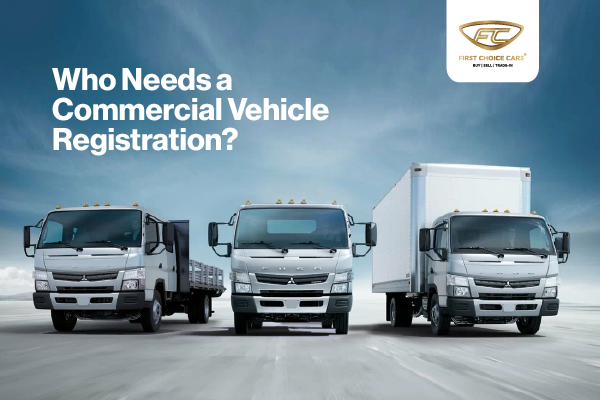
Every vehicle on the road doesn't qualify as "commercial." This type of registration applies only to vehicles used for business or profit-generating purposes, such as:
- Delivery vans and pickups that are used to transport goods or materials
- Trucks and trailers carrying cargo across the emirates
- Buses and school buses that transport passengers
- Company cars used by businesses for logistics or staff movement
- Specialised vehicles like refrigerated vans or mobile workshops
Private vs. Commercial Registration
The major difference between private and commercial registration is the purpose of use.
| Category | Private Vehicle | Commercial Vehicle |
|---|---|---|
| Usage | Personal / family transport | Business, logistics, or trade |
| Owner | Individual | Company or business |
| Inspection | Standard | Mandatory safety testing |
| Insurance | Private motor policy | Commercial motor insurance |
| Plates | White background with black lettering | White background with blue lettering |
If you're planning to buy one of the used commercial vehicles, ensure it already has a valid commercial classification. If it was previously registered as private, you'll need to reclassify it before applying for commercial plates.
Documents Needed for the Registration Process
Before starting the process, it is crucial to compile all the required documents. Absence of even one document can result in delays or suspension of your vehicle's registration process.
- For Mainland companies, you'll need:
- A letter in Arabic from the company, signed by the authorised person
- Emirates ID of the authorised person
- Copy of the valid trade licence
- Memorandum of Association translated into Arabic (legalised translation)
- Electronic customs certificate
- Sale and Purchase Agreement
For Free Zone companies:
- Emirates ID of the authorised person
- Signed letter from the company
- Copy of the trade licence
- Electronic customs certificate
- Memorandum of Association translated into Arabic (legalised translation)
- Sale and Purchase Agreement
- A letter from the Free Zone Authority for the areas of Jafza, Dubai Media City, and Dubai Airport.
Source:RTA Services
Note: You must ensure that the trade licence and insurance are valid and match the company name on the application.
Step-by-Step Registration Process
In the UAE, the overall registration process is almost similar, with a few differences in each emirate. Here's the complete process to get your vehicle registered for commercial use:
Step 1: Vehicle Inspection and Testing
First, bring your vehicle to one of the approved inspection centres, such as Wasel, Shamil, or Tasjeel, for inspection and testing. They will conduct a detailed examination, checking the vehicle's brakes, emissions, and overall safety. If your car fails this inspection test, fix the issues and come back later for another test.
Step 2: Obtain Commercial Insurance
Your vehicle must have current commercial insurance to be registered. If the car is used for passenger service or the transportation of goods, this policy must cover it for the specific business usage.
Step 3: Submit an Application for Registration
The next step is to submit the registration application. Always use the official online portals to submit your application after the vehicle passes the inspection test.
- RTA (Dubai)
- TAMM (Abu Dhabi)
- Sharjah Police eServices
If you would rather want to accomplish the process in person, you can also go to an authorised registration centre.
Step 4: Pay Applicable Fees
Now, you have to pay the registration, service, and plate issuance fees. Before proceeding further, ensure that any pending fines have been paid. If there are any unpaid violations, the system will not allow registration.
Step 5: Receive Commercial Plates and Registration Certificate (Mulkiya)
After the acceptance of your application, you will receive your Mulkiya (registration card) and commercial number plates. These documents prove that your car is now formally registered for commercial use.
Following all the above steps correctly ensures a smooth commercial vehicle registration in the UAE.
Commercial Registration Fees and Validity
Depending on the size, type, and model of your car, commercial registration costs vary in all different emirates. Typical costs are listed below:
| Emirate | Light Commercial | Heavy Vehicle | Notes |
|---|---|---|---|
| Dubai | AED 420 to 600 | AED 900 to 1,200 | Includes plate fees |
| Abu Dhabi | AED 350 to 600 | AED 900+ | Based on vehicle tonnage |
| Sharjah | AED 350 to 450 | AED 900 to 1,000+ | May include inspection costs |
- Registration Validity: 1 year
- Grace Period: 30 days after expiry in Dubai. In Abu Dhabi and Sharjah, there's no official grace period.
- Renewal: Use the RTA, TAMM, or Sharjah Police portals. It may be necessary to re-inspect older vehicles. Failure to renew the registration can lead to penalties or vehicle impoundment.
Note: Fees may also vary depending on plate category, vehicle weight, or optional services
Special Requirements for Different Vehicle Types
Different commercial vehicles are under different use cases. Therefore, sometimes additional conditions also apply, including:
Light Commercial Vehicles
- Require load capacity certification
- The cargo area must comply with safety standards
Heavy Trucks and Trailers
- Must meet specific load and braking standards
- Often require special road permits for inter-emirate operations
Passenger Transport
- Must comply with safety guidelines such as seat belts, emergency exits, and CCTV
- School buses need approval from the education and transport departments.
Refrigerated and Specialised Vehicles
- Must pass hygiene and temperature control inspections
- Refrigeration systems must be certified for safe food or material transport
Common Reasons for Delays or Rejection
Sometimes, even a small issue can delay or reject your application. Here are the most common reasons for delay or rejection:
- Missing or expired documents, especially the trade licence or insurance
- Failing the technical inspection
- Outstanding traffic fines
- Inconsistent ownership details or company name mismatches
- Unapproved modifications like cargo box extensions or branding decals
It's wise to check all documents carefully, verify vehicle readiness, and use authorised centres to minimise issues.
Practical Tips for a Smooth Registration
With some practical tips, you can save your time and effort. Here, we have some tips to ensure a smooth registration process:
- Renew your trade licence before it expires because it's often required for vehicle renewal, too.
- Ensure all documents use the same company name and details.
- For faster approvals, use authorised testing centres like Tasjeel, Shamil, or Wasel.
- Settle all fines in advance to avoid application holds.
- Keep digital copies of your documents ready for online uploads.
- If you're buying a used commercial Vehicle, confirm that the seller has cleared all pending dues and is eligible for commercial re-registration.
- Track your application online through your emirate's portal.
- Stay updated with changes in transport authority rules or fee schedules.
- Always choose a trusted auto dealer like First Choice Cars, a reputable dealership in the UAE, who offer a wide range of reliable Used Commercial Vehicles for Sale.
Frequently Asked Questions
What documents does a company need to register a commercial vehicle?
Requirements vary by emirate and vehicle use. They commonly include the company traffic file, a valid trade licence, an authorised company letter, vehicle insurance, a technical inspection or registration test, and an ownership or transfer certificate. Confirm the latest requirements with the relevant traffic authority before purchase.
Which driving licence do my drivers need for a van or truck?
In Dubai, the RTA's light-vehicle licence covers vans and pickups with an empty weight up to 2.5 tonnes and up to 2 tonnes of cargo, which covers most panel vans. Heavier trucks require a heavy-vehicle licence, and buses need a light-bus licence for up to 26 passengers or a heavy-bus licence above that.
Do commercial vehicles need a speed limiter?
Yes. Speed limiters are mandatory for commercial vehicles in the UAE under RTA rules. Limiters fitted for compliance are calibrated and sealed by approved fitters, and the system does not affect the vehicle's braking.
Conclusion
The vehicle registration process in the UAE may initially seem complicated. But once you understand all the steps of the process, registering a commercial vehicle seems simple. Following the right registration procedures keeps your business operations running smoothly, whether you drive a delivery van in Sharjah, a logistics fleet in Dubai, or a transport company in Abu Dhabi. Because procedures and fees can change over time, remember to always double-check the requirements on official government portals. If you prepare well, registering a commercial vehicle can be a smooth process, allowing your company to operate legally, profitably, and safely.
Disclaimer:All information, including pricing, vehicle details, and legal requirements, is accurate at the time of publication but may be subject to change due to market conditions or policy updates. While First Choice Cars makes every effort to ensure the accuracy of the information provided, we hold no responsibility for any errors, omissions, or outdated content. We recommend contacting our team directly to confirm the latest details before making any decisions.