
Buying a used car in the UAE is not the same as picking one off a shelf. There is the budget to think about, the paperwork, the insurance, the fuel type, and whether the car will actually survive the daily grind of Sheikh Zayed Road traffic or the summer heat in Sharjah. Most buyers walk in with a rough idea of what they want and walk out confused after seeing ten different models that all look good on the surface.
This is where a dealership's real job begins. At First Choice Cars, the process is not about pushing whatever car has been sitting longest on the lot. It is about sitting down with a buyer, understanding what they actually need, and narrowing things down until the decision becomes obvious rather than overwhelming. This article walks through that process step by step, showing how it typically plays out on the showroom floor.
Understanding the Customer's Budget & Requirements
Every conversation at First Choice Cars starts with numbers, not car names. A buyer might open with "I want an SUV," but the more useful question is, what is the total amount they are comfortable spending, and is that a cash figure or a monthly installment they can commit to for the next few years?
This matters because the UAE used car market has a wide price spread even within the same category. A well-kept sedan from a mainstream brand can cost far less than a mid-range SUV of the same age, and financing terms change the real monthly cost significantly depending on the down payment and loan tenure.
What the Budget Conversation Actually Covers
- Total spend vs monthly installment: A buyer thinking in monthly terms often has a very different real budget than one thinking in total cash price.
- Family size and daily use: How many people the car needs to carry regularly, and whether that number changes on weekends or during travel season.
- City driving vs. longer trips: Someone doing short daily commutes within Dubai has different priorities than someone regularly driving to Abu Dhabi or Al Ain.
- How long they plan to keep the car: A three-year ownership plan changes the calculation compared to someone looking to keep a car for seven or eight years.
Why This Step Gets Skipped, and Why It Shouldn't
A common mistake buyers make on their own is falling in love with a car that looks right in photos but doesn't fit the budget once insurance, registration, and running costs are added on top of the sticker price. Getting this sorted first, before even looking at specific models, saves everyone time later and avoids the disappointment of falling for a car that was never realistic in the first place.
This happens more often than people think. For instance, a buyer may arrive looking for a premium SUV after seeing it online, only to realise that once insurance, monthly finance payments, fuel, and maintenance are factored in, it stretches the budget too far. After discussing their priorities, they often leave with a newer, better-equipped crossover that comfortably fits their finances and everyday needs.
Recommending the Right Vehicle Based on Lifestyle
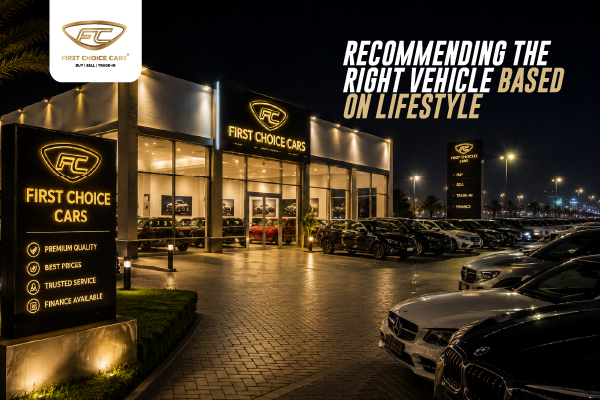
Once the budget is clear, the next step is matching it to how the person actually lives day to day. A single professional driving mostly on Dubai's main highways has very different needs from a family of five doing school runs in Sharjah or a small business owner who needs a pickup for deliveries across the Northern Emirates.
Matching the Car to the Person, Not the Other Way Around
A compact sedan makes sense for city commuting and easier parking in busy areas like Deira or Bur Dubai, but it will feel cramped for a family with growing kids, school bags, and regular grocery runs. On the other hand, a larger SUV offers space and comfort but comes with higher fuel consumption and a bigger price tag on tyres and servicing over time.
Some of the lifestyle questions that shape this recommendation include:
- Does the car need to handle unpaved roads, older neighborhoods, or frequent speed bumps, which affects how much ground clearance actually matters?
- Will the car mostly sit in traffic, which makes fuel efficiency and a comfortable seating position more important than raw power?
- Is boot space a real requirement, for example, for sports equipment, tools, or regular luggage for weekend trips?
- How much experience does the buyer have driving in UAE summer conditions, and do they know how a particular engine type handles extended heat exposure?
These conversations often reveal very different priorities. For example, a single professional commuting between Dubai Marina and DIFC usually prioritises fuel efficiency and easy parking, while a family with three children is more likely to value rear-seat space and cargo capacity.
Where Dealership Experience Actually Adds Value
This is where years on the showroom floor make a real difference. Staff who have handled hundreds of similar buyers can quickly flag things a first-time buyer might not think about on their own, like how a specific model's air-conditioning system holds up after five years of Dubai summers or which trims tend to have more common electrical issues down the line. The goal is never to sell a car. It's to sell the right car for that specific person's actual daily life, not an idealized version of it.
For example, a young couple may arrive convinced they need a large SUV for their growing family. After discussing their daily commute, parking situation, weekend travel, and budget, they often discover that a well-maintained midsize crossover offers all the space they need while keeping fuel, insurance, and maintenance costs lower. It's conversations like these that help buyers focus on what truly suits their lifestyle rather than what simply looks appealing.
Comparing Different Models Before Purchase
Buyers rarely arrive knowing exactly which model they want. More often, they have two or three options in mind and need help weighing them against each other honestly. This is completely normal, and it's actually a healthy part of the buying process rather than a sign of indecision.
It's common for buyers to compare a Japanese SUV with a similarly priced European model. Once servicing costs, spare parts availability, and resale value are discussed, many choose the option that offers better long-term value rather than simply the more recognisable badge.
What a Proper Comparison Should Include
- Resale value: Some models hold their value noticeably better than others in the UAE market, which matters if the buyer plans to sell or trade in within a few years.
- Spare parts availability: A model that is common on UAE roads is usually easier and cheaper to service than a rarer import.
- Fuel efficiency: Engine size and driving style both affect real-world consumption, which adds up over months of ownership.
- Mechanic familiarity: A widely owned model means more garages know it well, which usually means faster and more reliable repairs.
Looking Past the Badge
First Choice Cars encourages buyers to look past the brand name and focus on the actual condition of the specific unit sitting in front of them. Two cars of the same model, trim, and year can have completely different service histories, accident records, and general wear. That history matters more than the badge on the back of the car, and it's often the deciding factor once buyers actually see two comparable options side by side.
Explaining Ownership Costs (Insurance, Fuel & Maintenance)

This is the part many first-time buyers skip, and it's often where regret shows up later, usually a few months after the purchase. The price tag on the windshield is just the starting point. Insurance, fuel, and maintenance decide what the car actually costs month to month, and these numbers deserve a proper conversation before signing anything.
Insurance: Not Optional and Not Identical for Every Car
UAE law is strict here. A used car cannot be legally transferred into a buyer's name without an active insurance policy already in place, and this has to be sorted before registration can be completed at the RTA. Buyers are guided through:
- The difference between comprehensive and third-party cover and what each actually protects against
- How a car's age, engine size, and the buyer's own driving and claims history affect the premium quoted
- Why two cars of similar price can end up with very different annual insurance costs depending on these factors
Fuel: A Monthly Cost That Depends on More Than the Price at the Pump
Fuel cost depends heavily on engine size and driving habits, not just the price per litre on any given day. From October 1, 2026, UAE petrol prices will be AED 4.40 per litre for Super 98, AED 4.28 for Special 95 and AED 4.21 for E-Plus 91. The new rates were announced by the UAE Fuel Price Committee on September 30, 2026, as reported by Khaleej Times. Since UAE fuel prices are reviewed monthly, buyers choosing between a fuel-efficient sedan and a larger SUV are encouraged to think in terms of:
- Average monthly fuel spend based on their actual commute distance, not a best-case estimate
- How fuel costs compound over a full year of ownership rather than a single fill-up
- Whether the car's recommended fuel grade (E-Plus 91, Special 95, or Super 98) matches what they'd naturally choose to fill it with
Maintenance: The Cost That Shows Up After the First Year
Maintenance is the last piece of the ownership picture, and it varies a lot by brand and model. Cars with widely available parts and simpler mechanical layouts tend to be noticeably cheaper to maintain over time compared to models that require specialized servicing or imported parts sourced from outside the UAE. This is discussed honestly with buyers, including realistic expectations around:
- Routine servicing intervals and typical costs for that specific model
- Parts that are known to wear out faster on certain models, based on real service history
- Whether the car is still under any manufacturer or extended warranty coverage
The goal is that nobody walks away six months later wondering why their running costs are higher than expected.
Vehicle Inspection & Quality Checks
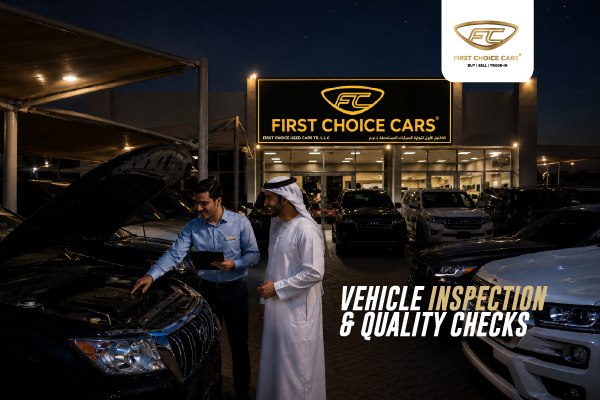
No car leaves First Choice Cars without a proper check first. This goes well beyond a quick look under the hood. It covers the engine, transmission, brakes, suspension, tyres, electrical systems, and the overall accident history of the vehicle.
The Regulatory Side of Inspection
This step connects directly to UAE regulation, not just internal dealership practice. Any used vehicle older than three years must pass an RTA technical inspection before ownership can legally be transferred, and this inspection covers brakes, steering, suspension, lights, and emissions, as confirmed by the RTA's official vehicle testing guidelines. Buyers are shown exactly where the car stands against these requirements before any money changes hands, so there are no last-minute surprises when it's time to visit a testing center.
What a Thorough Check Looks For Beyond the Basics
Beyond the mandatory regulatory checks, the dealership team also looks for smaller issues that don't always show up on a basic inspection report, including:
- Uneven tyre wear, which often hints at alignment or suspension problems that aren't obvious at a glance
- Signs of past water damage, which can be easy to miss without knowing the specific things to check for
- Inconsistent panel gaps or paint texture, which can indicate previous accident repairs even on a car with a clean-looking exterior
- Service record gaps, which raise questions about whether maintenance was actually done on schedule
This is the kind of detail that comes from handling used cars day in and day out, not from a checklist alone.
Test Drive & Final Decision Support
A car can look perfect on paper and still feel wrong once you're behind the wheel. That's why every serious buyer at First Choice Cars is encouraged to take a proper test drive before deciding, not just a quick loop around the block for the sake of formality.
What to Actually Pay Attention to During the Drive
- How the car handles at higher speeds, particularly if the buyer regularly drives on highways like Sheikh Zayed Road or Emirates Road
- Whether the air conditioning cools quickly and holds up, a genuinely important factor given UAE summer temperatures
- How the brakes feel under normal and sudden stops
- Whether the seating position and visibility feel comfortable for daily use, not just a five-minute test
Buyers are also encouraged to test the car under conditions similar to their actual daily drive, whether that's stop-and-go city traffic during rush hour or a longer, steadier highway stretch. A car that feels fine on a quiet test route can feel very different in real Dubai traffic.
Some buyers arrive convinced they've found the perfect car online but change their minds after the test drive because the seating position, visibility, or driving comfort doesn't suit their daily routine.
Bringing It All Together
Once the test drive is done, the final conversation ties everything discussed earlier back together: budget, lifestyle fit, model comparison results, ownership costs, and inspection findings. This is where a lot of buyers who came in unsure end up walking out confident, because the decision is no longer based on guesswork or a single feature that caught their eye. It's based on a full picture built one step at a time.
Why Buyers Trust First Choice Cars

Trust in the used car market is built slowly, and it comes down to a few consistent things that don't change from one customer to the next:
- Transparency about a car's condition and history, including issues that a less thorough seller might choose not to mention
- No pressure to rush a decision, even when a buyer wants to take extra time comparing options
- Honest answers even when the answer is inconvenient, including telling a buyer directly when a particular car isn't the right fit for their needs
Buyers who have gone through this process often mention the same thing afterward: the conversation felt like getting advice from someone who actually understood their situation, not a sales pitch aimed at closing a deal quickly. That reputation is built one transaction at a time, and it's the reason many buyers return when it's time for their next car or send friends and family through the same doors.
Conclusion
Choosing the right used car in the UAE involves more than comparing prices online. It means understanding your actual budget, matching a car to how you really live day to day, comparing options honestly instead of going by badge alone, knowing the real ownership costs before committing, checking the vehicle thoroughly, and taking the time for a proper test drive under real conditions. First Choice Cars builds its process around exactly these steps, because a car that genuinely fits a buyer's life is worth far more than one that simply looked good in a listing photo.
FAQs
What documents do I need to buy a used car in the UAE?
You will typically need a valid Emirates ID and, if the car is financed, a No Objection Certificate (NOC) from the bank. The seller also needs to provide the current Mulkiya (registration card) and clear any outstanding fines before transfer.
Is vehicle inspection mandatory before buying a used car in the UAE?
Yes. Any vehicle older than three years must pass an RTA technical inspection before ownership can be transferred into the buyer's name, as confirmed by the RTA.
Can I transfer a used car into my name without insurance?
No. Under UAE law, a seller cannot legally transfer a used car without an active insurance policy already in place for the buyer.
How do I know if a used car is a good fit for my lifestyle?
Think about your daily routine first: how many people you carry regularly, the kind of roads you drive on most, and how often you take longer trips. A dealership that asks these questions before showing you cars is doing it right.
Does fuel type affect which car I should buy?
Yes. Since UAE fuel prices are reviewed monthly by the Fuel Price Committee, it's worth factoring in a car's fuel efficiency and recommended fuel grade against your typical monthly driving distance, not just the sticker price of the car.
What should I look for during a test drive?
Check how the car performs under conditions similar to your daily drive, air conditioning performance, brake response, steering feel, and comfort over a longer stretch, not just a short loop around the block.
Why does resale value matter when buying a used car?
A car with strong resale value and easily available spare parts tends to cost less to maintain and is easier to sell later. This is worth comparing across models before deciding, not just after.
Does First Choice Cars only sell specific car brands?
First Choice Cars works with a range of makes and models to match different budgets and lifestyle needs, rather than pushing a single brand regardless of fit.
Disclaimer: This article is general information, not legal, tax or financial advice. Bank procedures, settlement charges, release timings and registration requirements are set by the banks and the relevant authorities and change from time to time. Confirm the current position with your own lender and registering authority before acting. Payment timings described here apply to eligible vehicles and are subject to our published terms. While First Choice Cars makes every effort to ensure the accuracy of the information provided, we hold no responsibility for any errors, omissions, or outdated content.