
"Low mileage" is one of the first things many people look for when shopping for a used car.
It is understandable.
A lower odometer reading can appear reassuring. If two vehicles are similar in every other way, many buyers will naturally lean toward the one that has travelled fewer kilometres.
But there is a problem with making mileage the deciding factor.
Mileage tells you how far a vehicle has travelled.
It does not, by itself, tell you how the vehicle was driven, how consistently it was maintained, whether major components have already been replaced, whether the mileage is genuine, or whether the vehicle has been involved in an accident.
That is why a higher-mileage vehicle can sometimes make more sense than a lower-mileage vehicle.
The important word is sometimes.
Higher mileage should never be ignored. Instead, it should be placed into context.
First Choice Cars' own guidance on checking used-car mileage recommends looking at mileage alongside vehicle history, maintenance records, and physical condition rather than relying on the odometer alone.
So, when does higher mileage still make sense?
What Is Considered Normal Mileage for a Used Car?
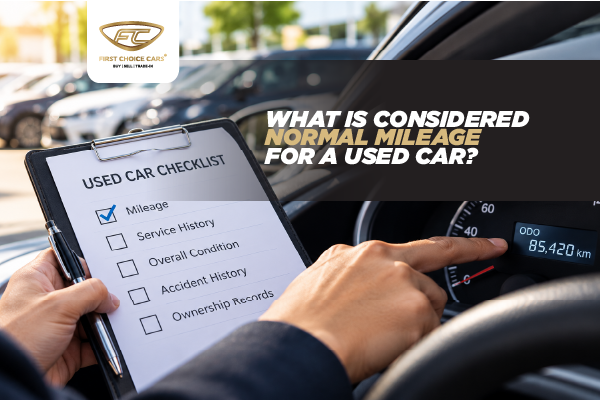
There is no single mileage number that can accurately classify every used car as either "low mileage" or "high mileage."
- A vehicle's age matters.
- Its model matters.
- Its service history matters.
- Its operating history matters.
- Its current condition matters.
A particular mileage figure can mean something very different on a three-year-old vehicle compared with a ten-year-old vehicle.
That is why buyers should avoid rules such as "never buy a car above X kilometers."
Such a rule ignores too much information.
Instead, ask whether the mileage is reasonable for the vehicle's age and whether the history supports it.
For example, if a vehicle has travelled a significant distance but has service records showing consistent maintenance, the mileage has context.
If another vehicle has a much lower odometer reading but almost no supporting documentation, the lower number may not tell the whole story.
Car Age vs. Mileage: Why Both Need to Be Considered Together
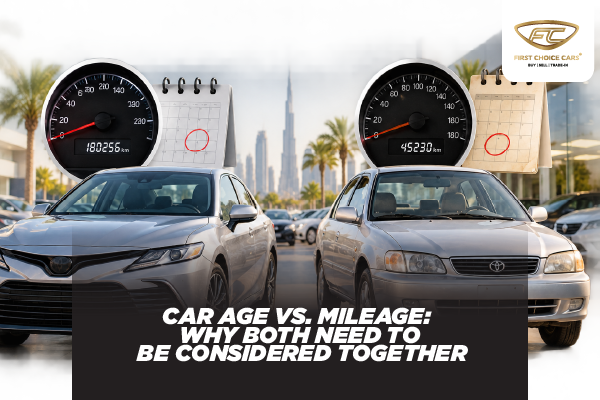
Age and mileage are connected.
A vehicle that has been on the road for many years has had more time to accumulate mileage and age-related wear.
A newer vehicle with unusually high mileage may have had particularly intensive use.
Neither situation automatically makes the vehicle a bad purchase.
The point is that the mileage needs to make sense within the vehicle's broader history.
When comparing used cars, ask:
- How old is the vehicle?
- How many kilometers has it travelled?
- Does the mileage progression look consistent?
- Is there a complete service history?
- Does the current physical condition make sense for the mileage?
- Have important components already been maintained or replaced?
This approach is much more useful than simply searching for the lowest number on the dashboard.
Highway Mileage vs. Heavy City Driving
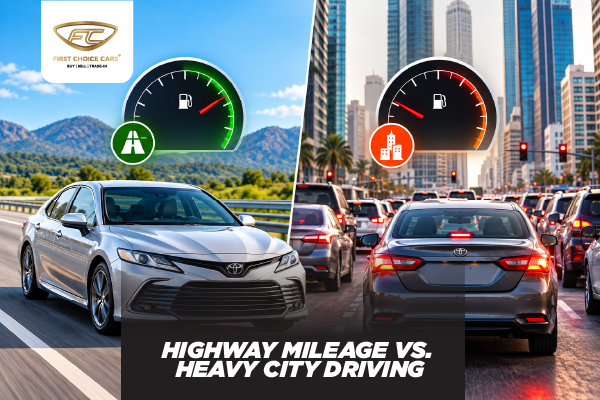
The type of driving a vehicle has experienced can also provide useful context.
Longer journeys and heavy stop-and-go urban driving can place different demands on a vehicle.
That does not mean highway kilometers are automatically "good" or city kilometers are automatically "bad."
Real-world vehicle wear depends on many variables, including:
- Driving style
- Traffic conditions
- Maintenance
- Climate
- Vehicle design
- Road conditions
- Journey length
- How the vehicle was operated
The important lesson for a buyer is to investigate how the vehicle was used when that information is available.
A mileage number without context is less informative than a mileage number supported by a clear history.
Why a Well-Maintained Higher-Mileage Car Can Be Better Than a Neglected Low-Mileage Car
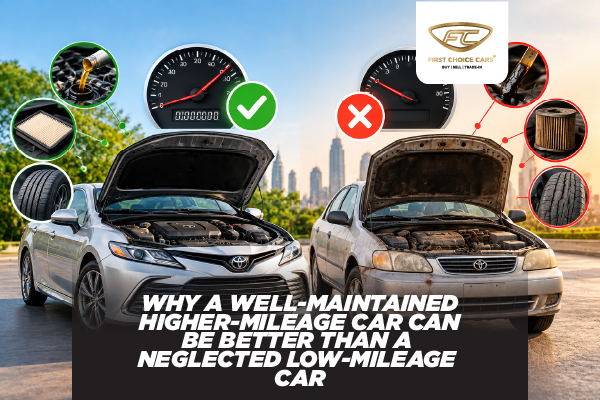
Consider two vehicles of roughly the same age. One has higher mileage but a complete maintenance history, while the other has fewer kilometres but limited records and visible signs of neglect.
| Factor | Higher-Mileage Vehicle | Lower-Mileage Vehicle |
|---|---|---|
| Mileage | Higher | Lower |
| Service History | Regular and documented | Incomplete or missing |
| Maintenance records | Invoices and service records available | Limited supporting documentation |
| Major maintenance | Important work has been documented | Upcoming maintenance may be unclear |
| Mileage history | Records show logical progression | History contains gaps or inconsistencies |
| Mechanical condition | Performs well during inspection | Shows unresolved mechanical concerns |
| Interior condition | Wear is consistent with age and use | Signs of neglect despite lower mileage |
| Overall history | Clear and transparent | Important periods are unexplained |
Which vehicle is better?
You cannot answer that question simply by looking at the odometer.
The higher-mileage vehicle may provide a clearer picture of how it has been owned and maintained. Meanwhile, the lower-mileage vehicle may carry more uncertainty if its service records are incomplete or its current condition raises concerns.
This does not mean a higher-mileage car is automatically the better choice. It simply shows why mileage should be assessed alongside maintenance, condition, and history. The odometer is an important piece of evidence, but it should not be the only factor used to judge a used car.
The Importance of Complete Service History
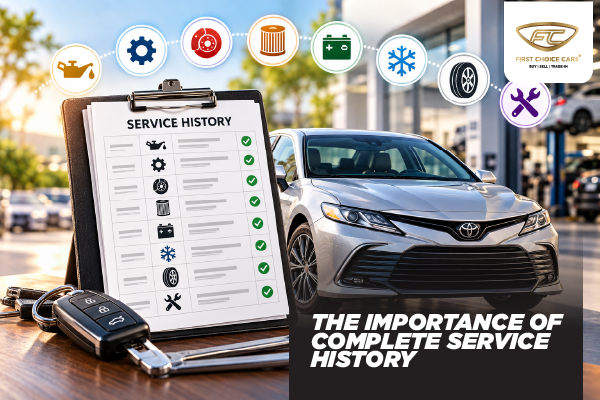
Service history can be especially valuable when considering a higher-mileage vehicle.
A good record can help you understand how the car has been maintained over time.
Look for:
- Service dates
- Recorded mileage
- Workshop invoices
- Major repairs
- Parts replaced
- Routine maintenance
- Evidence of regular servicing
The purpose is not to find a vehicle that has never needed repairs.
A used car is expected to require maintenance.
The important question is whether the owner appears to have maintained it responsibly and whether the records tell a consistent story.
A car with higher mileage and extensive maintenance records can sometimes be easier to assess than a low-mileage vehicle with little history.
Engine and Transmission Condition
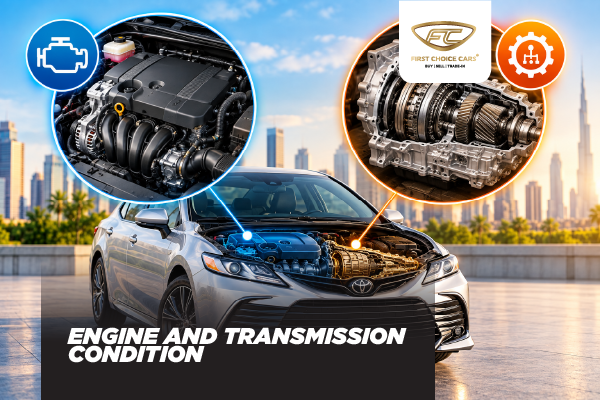
Mileage becomes much more meaningful when combined with mechanical condition.
The engine and transmission are central to the vehicle's operation and can represent significant repair costs if problems develop.
A buyer should therefore pay attention to actual behavior rather than simply asking:
"How many kilometers does it have?"
Consider:
- Does the engine start and run normally?
- Are there unusual noises?
- Are warning lights present?
- Are there visible fluid leaks?
- Does the transmission shift properly?
- Is there hesitation or unusual behavior?
- Does the vehicle overheat?
- Does the current mechanical condition match its history?
First Choice Cars' published inspection process states that its vehicles go through detailed checks before being offered for sale, including mechanical and electrical inspection.
For a buyer considering a higher-mileage car, a proper inspection can provide much more useful information than the odometer alone.
Replacement of Major Maintenance Items
A higher-mileage vehicle may have already had some significant maintenance completed.
That can be relevant when comparing two vehicles.
For example, one car may have recently had important wear-related components replaced, while another vehicle with fewer kilometers may be approaching the point where those components require attention.
This does not mean buyers should assume a higher-mileage vehicle has "already taken care of everything."
Maintenance requirements vary by vehicle. The correct approach is to check the manufacturer's recommended maintenance schedule and compare it with the actual service records.
Ask:
- What maintenance has already been completed?
- What is likely to be due next?
- Are there invoices?
- Were replacement parts documented?
- Does the vehicle's condition support the claimed maintenance history?
Signs That a Higher-Mileage Car Has Been Properly Cared For
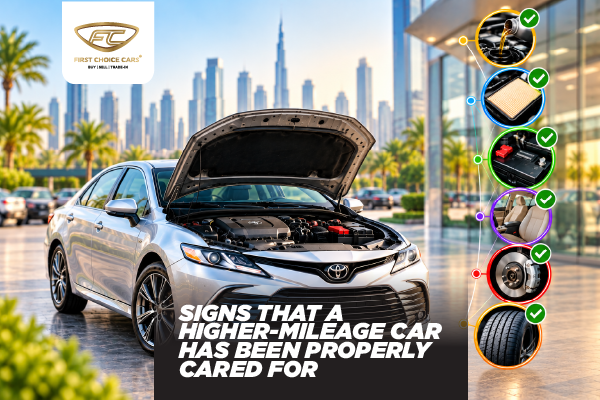
There are several signs that can make a higher-mileage vehicle more attractive.
Consistent Maintenance Records
Regularly documented servicing provides evidence of how the vehicle was maintained.
Logical Mileage Progression
Mileage recorded on service and inspection documents should generally progress logically.
Good Mechanical Condition
A higher odometer reading is less concerning when the vehicle performs properly and does not show obvious unresolved mechanical problems.
Reasonable Interior Wear
The interior should make sense for the vehicle's age and mileage.
Transparent History
A seller who can answer questions and provide documentation makes the vehicle easier to evaluate.
None of these factors guarantees that a vehicle is a good purchase.
Together, however, they provide considerably more information than mileage alone.
When Higher Mileage Can Help You Get Better Value for Money

One potential advantage of higher-mileage cars is that they may be priced lower than otherwise comparable lower-mileage examples.
That can create an opportunity for buyers.
But a lower purchase price does not automatically mean a lower ownership cost.
Before deciding that a high-mileage car is a bargain, consider:
- Purchase price
- Expected maintenance
- Tyres
- Battery
- Repairs
- Insurance
- Registration-related costs
- Fuel consumption
- Future resale value
A vehicle that costs less upfront but immediately requires expensive repairs may not be a bargain.
On the other hand, a well-maintained higher-mileage car that passes inspection and has a credible service history can offer strong value for a buyer whose priorities are clear.
Models Known for Handling Higher Mileage Well
It is tempting to create a list of vehicles that are "known to last forever." However, First Choice Cars evaluates each used vehicle individually rather than assuming that a particular model will automatically remain reliable at higher mileage.
In practice, vehicles that remain in good condition at higher mileage tend to have several things in common. During vehicle evaluation, the factors that matter most include a consistent service history, documented maintenance, logical mileage records, overall mechanical condition, and the results of the vehicle inspection.
Two examples of the same model can have very different histories. One may have received regular servicing and timely repairs, while another may have experienced missed maintenance or demanding daily use. Their odometer readings may be similar, but their actual condition can be very different.
When assessing a higher-mileage vehicle, First Choice Cars considers the individual vehicle rather than relying solely on model reputation. The evaluation looks at factors such as:
- Available service and maintenance records
- Whether the recorded mileage is supported by documentation
- Engine and transmission condition
- Signs of excessive interior or exterior wear
- Evidence of previous repairs or accident damage
- The vehicle's overall mechanical condition
- Maintenance work that has already been completed and work that may be required next
For this reason, buyers should treat a model's reputation as a starting point rather than a guarantee. A well-maintained higher-mileage example may be worth considering, but the final decision should depend on the condition, history, and inspection results of the specific vehicle.
When High Mileage Should Be a Warning Sign
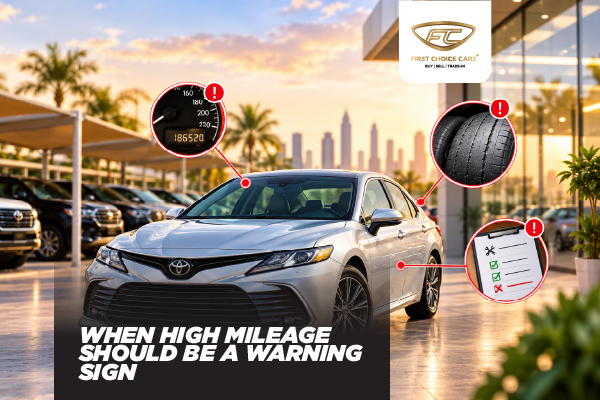
Higher mileage deserves more caution when it appears alongside other concerns.
- For example:
- Missing service records
- Unexplained mileage gaps
- Significant mechanical faults
- Excessive interior wear
- Major accident history
- Worn tyres
- Warning lights
- Poor maintenance
- Unexplained ownership history
The combination is what matters.
A high-mileage car with good maintenance and a clean inspection is one situation.
A high-mileage car with poor maintenance and unresolved mechanical problems is entirely different.
Mileage Combined With Accident History
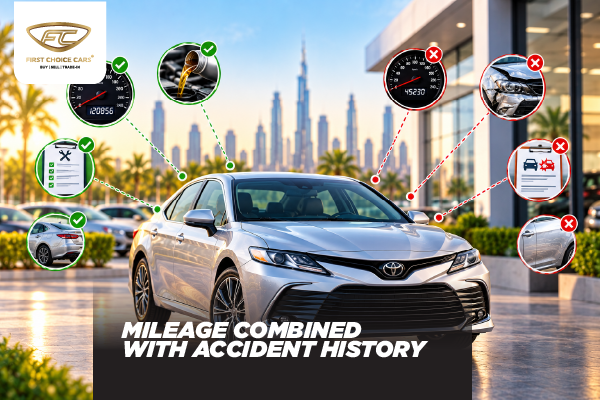
A vehicle's mileage should also be considered alongside accident history.
If a high-mileage vehicle has been involved in a serious accident, buyers should understand the extent of the damage and the quality of repairs.
Abu Dhabi Police provides an official Vehicle Accidents Inquiry service that can be used to search accident information using a vehicle's chassis number.
A record search is useful, but it does not eliminate the need for inspection.
A buyer still needs to understand the vehicle's current physical and mechanical condition.
How to Check Whether Mileage Appears Genuine
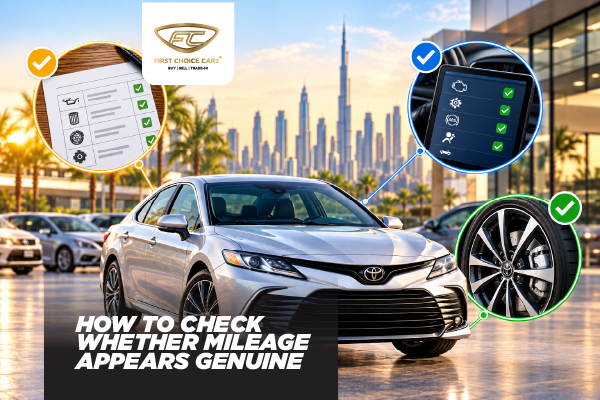
Mileage verification should involve more than looking at the dashboard. First Choice Cars recommends comparing mileage with available vehicle records and history.
Useful sources of comparison can include:
- Service records
- Workshop invoices
- Inspection documents
- Registration-related records
- Previous documentation
- Other reliable vehicle-history information
You can also compare the claimed mileage with the vehicle's overall condition.
Again, physical wear does not prove mileage fraud.
But significant inconsistencies deserve questions.
For example, if documentation shows one mileage figure and later records show an unexplained lower figure, that requires investigation before purchasing.
What to Inspect Before Buying a Higher-Mileage Used Car
A higher-mileage vehicle deserves careful inspection.
- Engine: Check for abnormal sounds, warning lights, leaks, and other signs of mechanical problems.
- Transmission: Pay attention to shifting behavior and unusual noises.
- Suspension: Look for unusual noises, poor handling, or other signs of wear.
- Brakes: Check braking performance and the condition of relevant components.
- Tyres: Inspect tread, wear patterns, and general condition.
- Interior: Look for excessive wear and compare it with the claimed mileage.
- Exterior: Look for accident repairs, dents, paint differences, and other signs of damage.
- Service History: Ask for documentation rather than relying entirely on verbal claims.
- Accident History: Use available official records and inspect the vehicle for signs of previous repairs.
- Documentation: Confirm that the necessary ownership and vehicle documents are available.
First Choice Cars' published used-car inspection guidance recommends checking areas including the exterior, tyres, interior, engine compartment, fluids, and electrical systems when evaluating a used vehicle.
How First Choice Cars Considers Mileage During Vehicle Evaluation
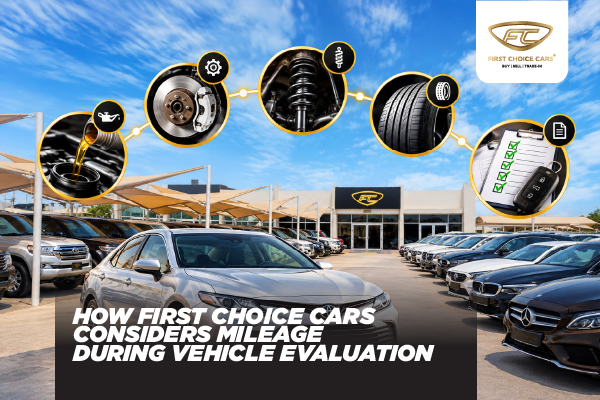
Mileage is one of the factors used to understand a vehicle's value, but First Choice Cars' current material places it alongside condition, history, maintenance, and market considerations.
The company's FAQs state that purchase offers are subject to physical inspection, document review, GCC-spec eligibility, and current market assessment.
Its mileage guidance also explains why buyers and sellers should verify the odometer against available records rather than assuming the dashboard number tells the complete story.
For sellers, this means a higher-mileage car should not automatically be considered unsellable.
For buyers, it means a lower-mileage car should not automatically be considered the better purchase.
Both vehicles need to be evaluated as complete packages.
A Simple Way to Compare Two Used Cars
When choosing between a lower-mileage car and a higher-mileage alternative, compare the vehicles using the same criteria rather than focusing on the odometer first.
| Factor | What to Compare | Why It Matters |
|---|---|---|
| Age | Compare the model year and overall age | Age-related wear can affect components even when mileage is low |
| Mileage | Check whether the kilometres are reasonable for the vehicle's age | Unusually high or low mileage may require further investigation |
| Service history | Look for regular servicing and documented maintenance | A consistent history provides a clearer picture of how the vehicle was cared for |
| Mileage records | Compare the odometer with available records | Logical mileage progression can help support the reading |
| Mechanical condition | Review inspection findings and test-drive performance | Current condition can reveal issues that mileage alone cannot |
| Accident history | Check available records and evidence of repairs | Previous damage may affect value and future ownership costs |
| Tyres and brakes | Assess current condition and likely replacement needs | Worn components can create immediate additional costs |
| Interior and exterior | Compare wear with the claimed age and mileage | Excessive or inconsistent wear can raise useful questions |
| Upcoming maintenance | Identify work likely to be required soon | A cheaper car may cost more if significant maintenance is immediately due |
| Asking price | Compare the total value offered by each vehicle | The lowest purchase price is not always the best value |
Once you have compared these factors, consider the complete ownership picture rather than one number.
A higher-mileage vehicle may offer better value because it is priced more competitively and has a strong maintenance record. A lower-mileage vehicle may justify a higher price when its condition and history are equally strong.
The goal is to identify which individual vehicle has the strongest combination of condition, maintenance history, documented mileage, and price.
The Bottom Line: Condition + Maintenance + History
Mileage matters, but it should not be treated as the final verdict on a used car.
A higher-mileage vehicle can still be a sensible purchase when its kilometres are supported by a consistent service history, logical mileage records, proper maintenance, and a satisfactory mechanical inspection. In some cases, it may also offer better value than a similar lower-mileage vehicle.
At the same time, high mileage should never be ignored. Missing records, major accident history, mechanical faults, excessive wear, or unexplained inconsistencies deserve careful investigation.
The same principle applies to low-mileage cars. A smaller number on the odometer does not automatically guarantee that a vehicle has been properly maintained or is free from problems.
The best approach is to assess the complete vehicle: its age, mileage, service history, mechanical condition, accident history, documentation, upcoming maintenance needs, and asking price.
If you are looking for used cars in the UAE, explore First Choice Cars' inventory and compare each vehicle based on its complete condition and history. Buyers looking for flexible payment options can also explore Used Cars on installment and review available vehicles based on their specifications, condition, mileage, and overall value.
Mileage should start the conversation—not end it.
FAQs
Is a high-mileage used car worth buying?
It can be. The key is to assess the vehicle's complete condition and history rather than relying only on its odometer. A well-maintained higher-mileage vehicle with documented servicing and a satisfactory inspection can be a reasonable purchase.
What mileage is too high for a used car in the UAE?
There is no single mileage figure that makes every used car unsuitable. Mileage should be considered alongside the vehicle's age, model, maintenance history, accident history, and current mechanical condition.
How can I check if a used car's mileage is genuine?
Compare the odometer reading with available service, inspection, and vehicle-history records. Look for logical progression in recorded mileage and investigate inconsistencies. First Choice Cars also provides a mileage-verification guide.
Should I avoid a used car with high mileage and an accident history?
Not automatically, but the combination deserves additional investigation. Check the accident history, understand what was repaired, and have the vehicle physically inspected. Abu Dhabi Police provides an official accident inquiry service using the chassis number.
Disclaimer: This article is general information, not legal, tax or financial advice. Bank procedures, settlement charges, release timings and registration requirements are set by the banks and the relevant authorities and change from time to time. Confirm the current position with your own lender and registering authority before acting. Payment timings described here apply to eligible vehicles and are subject to our published terms. While First Choice Cars makes every effort to ensure the accuracy of the information provided, we hold no responsibility for any errors, omissions, or outdated content.