
You enter your car's details online, answer a few questions, and receive a valuation. It looks straightforward. Then comes the physical inspection, and suddenly the number changes.
For many car owners in the UAE, this can feel confusing. If the online valuation was based on the information you provided, why isn't that automatically the amount you will receive?
The answer is simple: an online valuation is based on information that can be entered remotely, while a physical inspection allows the buyer to assess the actual vehicle.
A car's age, mileage, make, and model matter, but they are only part of the picture. Paintwork, previous repairs, accident history, mechanical condition, service records, specifications, tyres, modifications, and documentation can all affect what a buyer is prepared to offer.
First Choice Cars explains that its online valuation is a market-value indication rather than a final purchase offer. A physical inspection is carried out before a vehicle is purchased, because some aspects of a car's condition, history, and unique features cannot be established from an online form alone.
So, what exactly can change a car's valuation after inspection?
Initial Valuation vs. Physical Inspection
An online valuation is useful because it gives a seller a starting point.
You normally provide information such as
- Make and model
- Model year
- Mileage
- Specification
- Vehicle condition
- Service history
- Other relevant details
Based on that information, an initial estimate can be generated. But an online form cannot physically examine a vehicle.
It cannot look closely at every body panel. It cannot assess the condition of the tyres. It cannot hear an unusual engine noise. It cannot determine whether a particular panel has been repaired unless that information is disclosed. It cannot independently verify every detail of the vehicle's history.
A physical inspection changes the amount of information available.
First Choice Cars explains that its online valuation is a market-value indication and that the final price can differ after physical inspection because certain aspects of a vehicle's history, condition, unusual features, and customization may not be apparent online.
This is why sellers should think of the online number as a starting point rather than a guaranteed final amount.
Why Two Similar Cars Can Receive Different Valuations

Two cars can have the same make, model, year, and mileage and still receive different valuations.
Imagine two SUVs that appear almost identical on paper. Both are the same model year. Both have travelled a similar number of kilometres. Both have the same engine and basic specification.
But one has a complete service history, good tyres, a clean interior and original body panels. The other has several repaired panels, worn tyres, missing maintenance records, and signs of previous damage.
On a comparison website, those two vehicles may initially appear very similar.
During a physical inspection, however, their differences become much clearer.
That is why a professional valuation looks beyond the basic specifications.
The question is not simply:
"What is this model worth?"
It is:
"What is this particular example worth, given its actual condition, history, specification, and current market position?"
That distinction is important when selling any used vehicle.
Exterior Condition: Paint, Scratches, and Dents
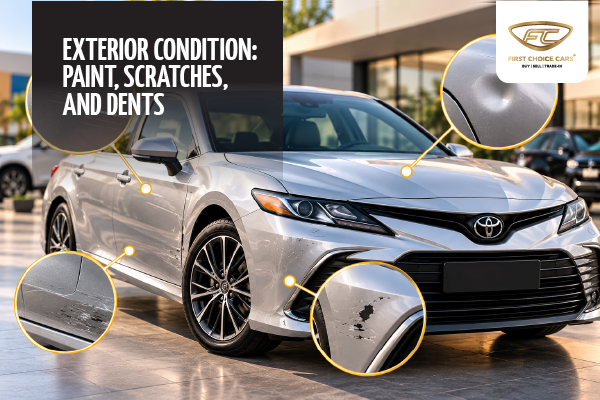
The exterior is one of the easiest areas for an inspector to assess.
A vehicle can have normal signs of use without necessarily having serious problems. Small scratches, minor stone chips, and ordinary wear are expected on many used vehicles.
The situation changes when there are more significant issues.
An inspection may identify:
- Deep scratches
- Large dents
- Damaged bumpers
- Repainted panels
- Mismatched paint
- Poor-quality body repairs
- Damaged trim
- Uneven panel gaps
- Signs of previous accident repairs
The presence of previous paintwork does not automatically mean a vehicle is bad.
A panel may have been repaired because of a relatively minor incident.
What matters is understanding what happened and assessing the quality and extent of the repair.
From a valuation perspective, a buyer also needs to consider what preparation may be necessary before the vehicle can be resold.
If a vehicle requires bodywork, paint correction, or replacement parts, those costs can influence what the buyer is prepared to offer.
Accident History and Chassis Condition
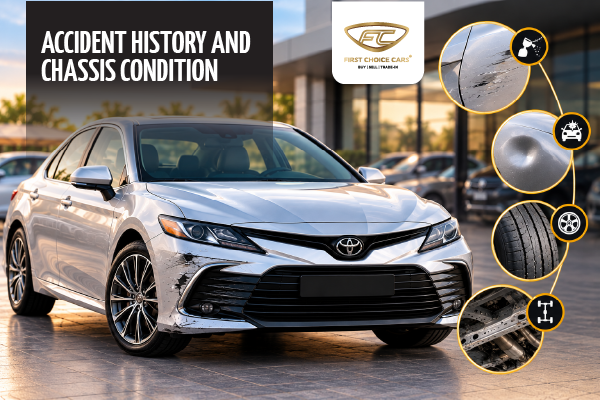
Accident history can have a significant role in used-car valuation, especially when damage involves important structural or mechanical components.
A car may look attractive after repairs while still requiring careful investigation into what happened previously.
That is why accident history and physical inspection should be considered together.
For example, Abu Dhabi Police provides an official Vehicle Accidents Inquiry service that allows users to search vehicle accident information using the chassis number.
A historical accident record and a physical inspection provide different kinds of information.
The record can help establish whether an accident has been recorded.
The inspection helps assess the vehicle as it exists today.
When evaluating an accident history, useful questions include
- How serious was the accident?
- Which areas of the vehicle were damaged?
- Were structural components affected?
- What repairs were carried out?
- Were replacement parts used?
- Does the current condition appear consistent with the repair history?
- Are there visible signs of poor-quality repair?
The more uncertainty there is around a vehicle's history, the more difficult it can be for a buyer to establish its true resale position.
Mileage and Whether It Matches the Vehicle's Condition
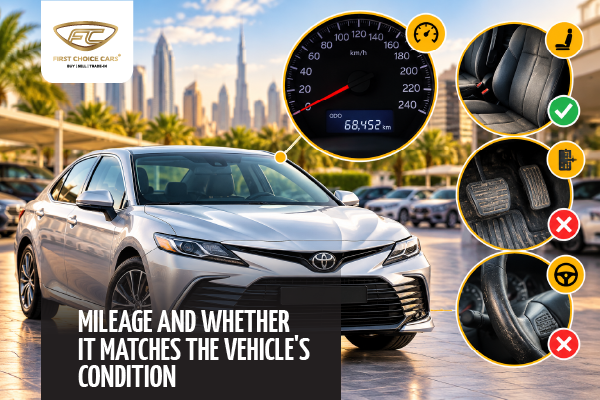
Mileage is one of the first figures people notice when looking at a used car.
It matters, but it does not operate independently.
A vehicle's mileage should make sense alongside its age, service records, and physical condition.
For example, unusually worn seats, steering-wheel surfaces, pedals, or other frequently used areas may prompt additional questions if the stated mileage is exceptionally low.
This does not mean physical wear alone proves that an odometer has been altered.
It means that mileage should be considered as part of a broader history.
First Choice Cars' own mileage guidance recommends checking the odometer against available service and vehicle-history information rather than relying on the dashboard number alone.
A consistent history can strengthen confidence in the valuation.
Inconsistent information can create uncertainty.
Mechanical Condition Can Change the Valuation
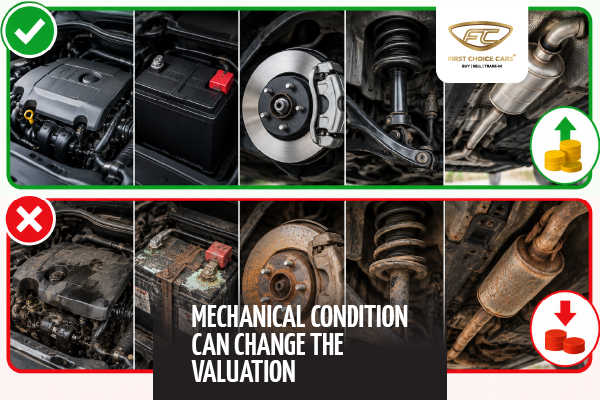
A vehicle can have excellent paintwork and a spotless interior while still having mechanical issues.
That is why physical inspection matters.
Depending on the vehicle and assessment, relevant mechanical areas may include:
- Engine
- Transmission
- Suspension
- Brakes
- Steering
- Cooling system
- Electrical systems
- Warning lights
- Fluid leaks
Other operational components
A mechanical issue does not necessarily make a vehicle unsellable.
But it can affect the economics of the transaction.
A dealer purchasing the vehicle has to consider the work required to prepare it for resale.
If a vehicle requires substantial repairs, those costs can affect the amount a buyer can reasonably offer.
First Choice Cars' published inspection process explains that its vehicles go through a detailed inspection before being offered for sale, including checks of mechanical and electrical areas.
Interior Wear and Overall Vehicle Care
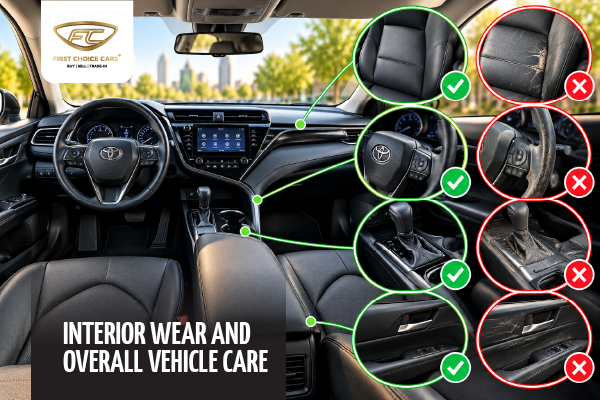
The interior can tell an inspector a surprising amount about how a vehicle has been used.
Areas that may be considered include:
- Seats
- Carpets
- Dashboard
- Door panels
- Steering wheel
- Controls
- Infotainment equipment
- Interior trim
- General cleanliness
Some wear is completely normal.
The key is whether the condition is reasonable for the vehicle's age and mileage.
For example, a high-mileage vehicle may naturally show more interior wear than a low-mileage vehicle.
But excessive damage, broken trim, or non-functioning equipment can affect the vehicle's resale preparation costs.
A clean interior is also easier to inspect.
First Choice Cars' current guidance on selling a used car recommends keeping the vehicle clean and well maintained and ensuring its documentation is organized when trying to maximize its resale appeal.
Service History and Maintenance Records
Service history can be one of the most useful forms of evidence when valuing a used vehicle.
A buyer wants to understand not only what the car looks like today but also how it reached its current condition.
Maintenance records can help answer questions such as
- Was the vehicle serviced regularly?
- When were major repairs completed?
- Which components have been replaced?
- Does the mileage recorded during servicing appear consistent?
- Has the vehicle received preventative maintenance?
- Are there unexplained gaps in its history?
A complete service history does not guarantee a particular valuation.
It does, however, reduce uncertainty.
A vehicle with limited documentation can require more investigation because the buyer has less evidence about its past.
First Choice Cars currently asks sellers to provide service history records where available as part of its trade-in requirements.
GCC Specifications vs. Imported Specifications
Vehicle specification can also affect how a car is evaluated in the UAE.
The distinction between GCC-specification vehicles and imported vehicles is particularly relevant to UAE buyers and sellers because specification, documentation, and eligibility can affect the transaction.
Dubai RTA's current ownership-transfer information includes requirements relating to vehicle documentation and, in relevant cases, evidence of Gulf-specification compliance.
First Choice Cars also states that its standard direct-purchase and trade-in processes are subject to vehicle eligibility, specification, and documentation requirements.
This is why sellers should provide accurate information about where their vehicle was originally specified and any relevant import history.
Tyres, Battery, and Other Items Requiring Attention
Some valuation differences come from relatively straightforward items.
Tyres are a good example.
If tyres are heavily worn, aged, or otherwise require replacement, the buyer has to account for that cost.
The same principle can apply to:
- Battery condition
- Brake components
- Lights
- Wiper components
- Damaged trim
- Other consumable or maintenance items
This does not mean every worn item produces a fixed deduction.
Instead, these issues contribute to the overall assessment.
A buyer needs to determine how much preparation the vehicle requires before it is ready for the next customer.
That preparation has a cost.
Number of Previous Owners and Vehicle History
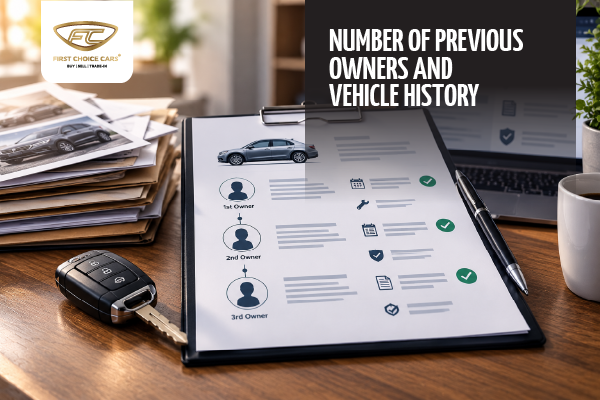
The number of previous owners can provide context, but it should not be treated as an automatic valuation formula.
A car with multiple owners is not automatically worth less.
Likewise, a single-owner vehicle is not automatically worth more.
What matters is the quality and consistency of the available history.
A buyer may want to understand:
- Who owned the vehicle?
- Where was it registered?
- Is the ownership documentation complete?
- Are service records available?
- Does the mileage history make sense?
- Are there accident records?
- Has the car been modified?
A documented history gives a buyer more confidence than a vehicle with unanswered questions.
Current Market Demand for the Make and Model

Valuation is not based only on the vehicle's condition.
Market demand matters too.
A dealer needs to consider what buyers are currently looking for, how quickly similar vehicles are moving, and what comparable vehicles are available in the market.
This means a seller should not assume that the price they paid several years ago, an old valuation, or another seller's advertised price represents today's market value.
First Choice Cars states that its valuation process considers current market circumstances and demand.
This is also why valuations can change over time even when the vehicle itself has not changed dramatically.
The market around it may have changed.
Modifications and Aftermarket Accessories
Modifications can have an unpredictable effect on resale value.
An owner may have spent significant money installing:
- Aftermarket wheels
- Performance parts
- Audio systems
- Cosmetic upgrades
- Suspension modifications
- Exhaust systems
- Exterior accessories
It is natural to assume that the money invested should be added to the car's value.
The resale market does not always work that way.
A modification may appeal strongly to one buyer and have little value to another.
It may also make the vehicle more difficult to market if the modification is highly personal or changes the car substantially from its original specification.
First Choice Cars specifically notes that unusual features and customization can influence valuation.
Outstanding Finance and Documentation Issues
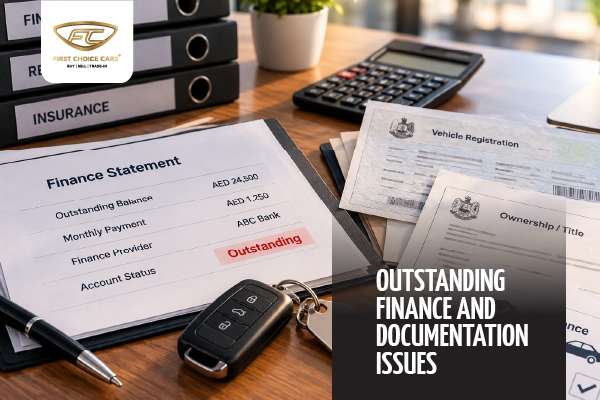
Outstanding finance is another factor that needs to be addressed before a vehicle transaction is completed.
The UAE government explains that car loans are secured by a mortgage over the financed vehicle in favor of the bank or finance company. UAE Government—Loans for Individuals.
That means a financed vehicle cannot simply be treated in the same way as a vehicle with no outstanding lender interest.
First Choice Cars states that a vehicle with outstanding finance can be handled through its process, with a current settlement figure requested from the bank and the settlement amount deducted from the agreed value.
For sellers, the important lesson is simple:
Know what you owe before calculating how much money you will actually have left after selling or trading in the car.
Why the Highest Online Estimate Is Not Always the Final Selling Price
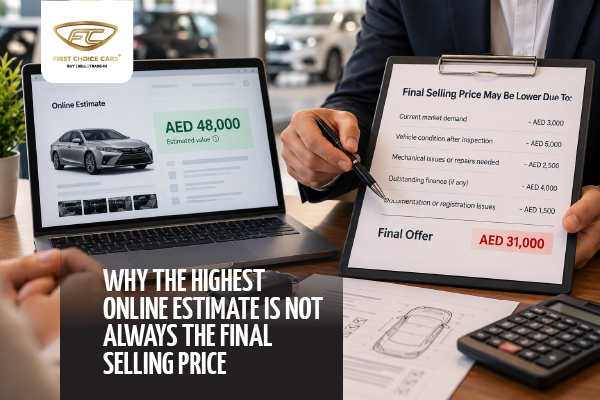
A high online valuation can be exciting.
But it should not be mistaken for a guaranteed purchase price.
An online estimate answers a question based on available information.
The physical inspection answers a more specific question:
What is this actual vehicle worth after its condition, history, and documentation have been assessed?
The difference can come from information that was:
- Missing from the original form
- Incorrectly entered
- Not visible online
- Discovered during inspection
- Revealed through documentation
- Related to current market conditions
First Choice Cars explicitly states that its online valuation is a market-value indication and that the final price may differ after physical inspection.
This is standard logic for any asset whose value depends partly on physical condition.
How First Choice Cars Evaluates a Vehicle During Inspection
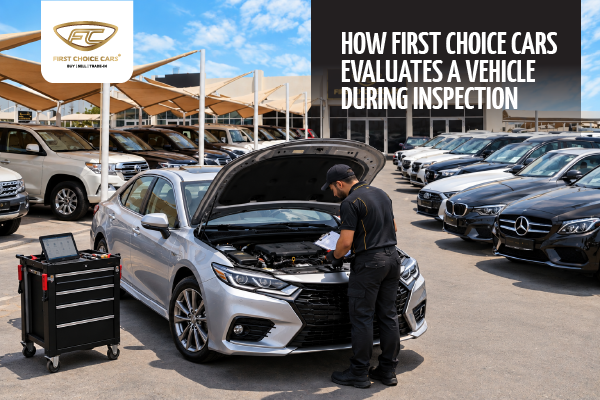
First Choice Cars' current process starts with vehicle information being submitted for an initial valuation.
The company then allows the seller to arrange an inspection.
Its trade-in page describes four main stages:
- Provide information about the vehicle.
- Schedule an inspection.
- Receive an offer after assessment.
- Complete the trade-in if the offer is accepted.
The company currently offers inspection options at its Sharjah showroom and home inspections across the UAE, subject to location and scheduling availability.
Its published vehicle-inspection process also explains that cars are examined before being listed, with attention to mechanical, electrical, accident-related, and other condition factors.
How to Prepare Your Car Before a Valuation
You cannot change the vehicle's age, mileage, or previous accident history.
But you can make the valuation process easier.
Gather Your Documents
Have your registration card, identification documents, service records, and other relevant paperwork ready.
Organize Your Service History
Put invoices and maintenance records together rather than searching for them during the inspection.
Be Transparent
If the car has been repaired, modified, or involved in an accident, provide accurate information.
An inspection is intended to establish the actual condition of the vehicle.
Clean the Vehicle
Cleaning does not magically increase mechanical value, but it makes inspection easier and presents the vehicle properly.
Bring All Available Keys
First Choice Cars currently lists car keys among the items requested for trade-in.
Check Your Finance Position
If the vehicle is financed, obtain the current settlement figure.
Do Not Spend Blindly on Repairs
Before spending significant money on cosmetic or mechanical work solely to improve resale value, consider whether the expected improvement in valuation justifies the repair cost.
Final Thoughts
A car valuation is not determined by one number on an online form.
Mileage matters. Age matters. Condition matters. History matters. Specification matters. Market demand matters.
The physical inspection brings these factors together.
That is why two similar vehicles can receive different offers and why an online estimate should be viewed as a starting point rather than a guaranteed purchase price.
If you are considering selling your vehicle, you can start with the First Choice Cars Sell Your Car service and arrange the next step after receiving your initial valuation.
Frequently Asked Questions
Can my car's valuation change after physical inspection?
Yes. First Choice Cars states that its online valuation is based on the information supplied by the customer and is a market-value indication rather than a purchase offer. The final price is determined after physical inspection, documentation review, and assessment.
What is checked during a used-car valuation?
The assessment can consider the vehicle's condition, mileage, service history, accident history, specification, documentation, modifications, and current market suitability. The precise inspection depends on the vehicle and transaction.
Does accident history reduce a car's value?
It can. The impact depends on the nature and extent of the damage, the repairs carried out, and the vehicle's current condition. Abu Dhabi Police provides an official accident inquiry service using the vehicle's chassis number.
Does outstanding car finance affect the selling or trade-in process?
It can. The UAE government states that car loans are secured by a mortgage over the vehicle, while First Choice Cars says that outstanding finance can be handled through a settlement process in which the settlement amount is deducted from the agreed trade-in value.
Disclaimer: This article is general information, not legal, tax or financial advice. Bank procedures, settlement charges, release timings and registration requirements are set by the banks and the relevant authorities and change from time to time. Confirm the current position with your own lender and registering authority before acting. Payment timings described here apply to eligible vehicles and are subject to our published terms. While First Choice Cars makes every effort to ensure the accuracy of the information provided, we hold no responsibility for any errors, omissions, or outdated content.