
Selling a car in Sharjah is straightforward once you know the order things happen in. The part that catches people out is the plates: for a Sharjah-registered car, and for every emirate except Dubai, you surrender the plates in person before the transfer can be completed. Do that first and the rest follows quickly.
This guide covers a private individual selling their own car. If you are selling a commercial vehicle or a car registered to a company, see our guide to selling commercial vehicles in the UAE.
Selling in Abu Dhabi instead? The steps differ in a few places. See our Abu Dhabi used car selling guide.
The Short Version
- Surrender the plates first. For a Sharjah-registered car, the seller surrenders the plates in person at Tasjeel Auto Village. Only then can the transfer be completed online.
- Clear the car before you start. Traffic fines from any emirate, Salik and Darb fines, a legal case against the vehicle or an impound will each stop the transfer.
- Who attends depends on the buyer. A buyer registering the car in their own name attends with you. A dealer taking a possession or transfer certificate does not attend at all.
- The inspection follows the channel. Online through the MOI portal with a valid Mulkiya needs no technical inspection. An expired Mulkiya, or a transaction done at a registration centre, does.
- Insurance does not transfer. The buyer takes a new policy. You cancel yours and claim the refund on the unused premium.
Before You Start: What Blocks a Transfer
These apply in every emirate, not just Sharjah, and every one of them will stop the transaction at the counter.
- Traffic fines, from any emirate. Every fine on the vehicle has to be cleared, including fines registered outside Sharjah. A car driven between emirates can carry fines the owner never sees on the Sharjah system.
- Salik and Darb fines. Salik gives five working days to top up before a trip becomes a fine, and once a fine is issued a top-up does not clear it.
- A legal case against the vehicle. An unresolved accident case, or any other case registered against the car, stops the transfer until it is closed.
- An impounded vehicle. Cannot be transferred until it is released.
- Bank finance. A financed car cannot be transferred until the loan is settled and the bank has released the mortgage. The release is electronic at major UAE lenders. Our guide to selling a car with an outstanding loan covers the settlement letter, the release and the timing.
Fines are quick to pay. A legal case or an impound is not, so check for either well before you plan to sell.
Step 1: Surrender the Plates
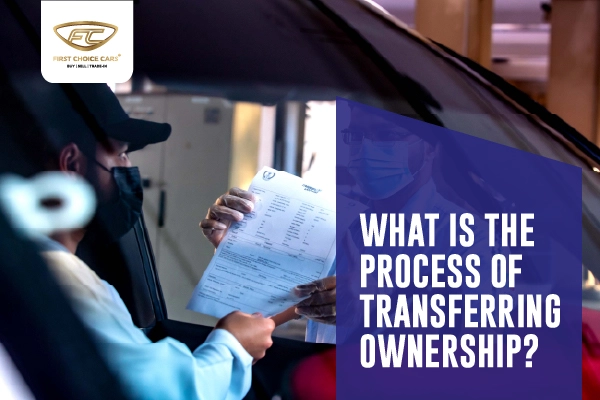
This is the step that surprises people, and it comes first.
If the car carries Sharjah plates, or plates from any emirate other than Dubai, the seller surrenders them in person at Tasjeel Auto Village before the transfer can be completed online. There is no way round it and nobody can do it for you.
Once the plates are surrendered, the transfer itself can be completed through the MOI portal without another visit.
Step 2: Choose the Channel
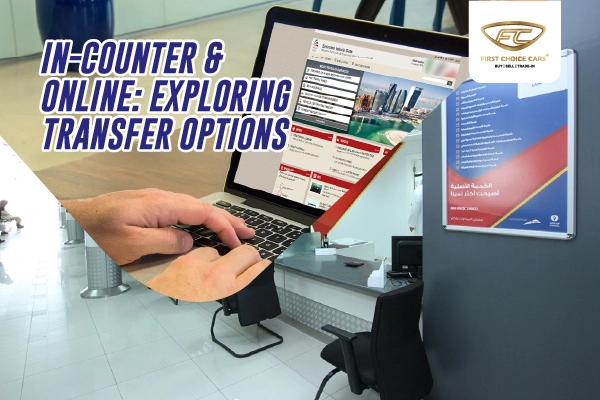
A Sharjah transfer can be completed in one of four places:
- MOI portal. Online, after the plates have been surrendered.
- Tasjeel, Auto Village. Also where plates are surrendered.
- MotorCheck, Rafid, Souq Al Haraj. In the used car market itself, which is convenient if you are selling to a dealer there.
- Traffic and Licensing Service Centre, Sharjah Muroor.
The channel you choose decides whether the car needs a technical inspection, which is covered below.
Step 3: Know Who Has to Attend
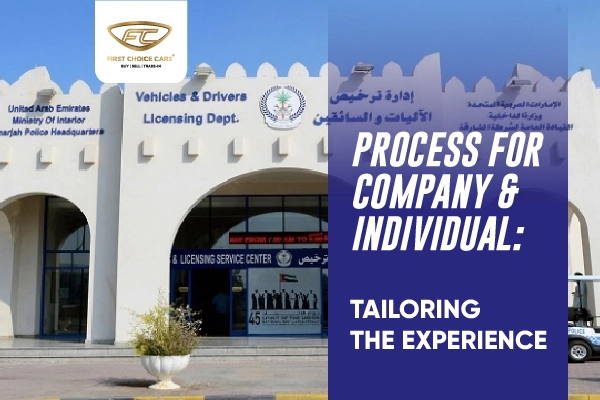
This depends entirely on what the buyer intends to do with the car, and it is worth understanding before you agree a sale.
| Buyer registers the car | Buyer is a dealer | |
|---|---|---|
| Who attends | Buyer and seller, together | Seller only, to surrender the plates |
| How it completes | At the centre, or online | Online, buyer confirms by OTP |
| What the buyer supplies | Emirates ID, UAE driving licence, new insurance policy in their name | Copy of Emirates ID and driving licence |
| Document issued | New Mulkiya in the buyer's name | Possession or transfer certificate |
The second column is the easier day. A dealer buying for resale does not register the car in its own name, so there is no joint appointment to arrange, no insurance to be in place on the day, and nobody else's schedule to work around. You surrender the plates, and the rest completes online.
When a Technical Inspection Is Needed
The inspection follows the channel, not the buyer.
- Online through the MOI portal, Mulkiya still valid: no technical inspection, whether the transaction is a possession certificate or a full ownership transfer.
- Online, Mulkiya expired: a technical inspection is required.
- At a registration centre: a technical inspection is required.
So if your registration is current and the buyer does not need to register the car on the day, the transfer can be done without putting the car through a test at all.
Who Can Transfer the Car
A vehicle in the UAE is registered to one owner. There is no joint ownership for individuals, so the person named on the Mulkiya is the one who transfers it, and nobody else can do it in their place without a power of attorney.
Giving a car to a family member follows exactly the same process as selling it. There is no separate route for a gift.
Documents
What the seller brings
- Original Emirates ID
- Driving licence and passport copy
- Original vehicle registration card (Mulkiya)
- Both sets of keys and the service records. Neither is required for the transfer itself, but a missing second key reliably costs you money on the price a dealer will offer.
- Bank details for an account in the registered owner's name, if you are being paid by transfer
- Mortgage release confirmation, if the car was financed
What the buyer brings
A buyer registering the car needs their own Emirates ID, a valid UAE driving licence, and a new insurance policy in their name effective from the transfer date. A dealer taking a possession or transfer certificate supplies only a copy of the Emirates ID and driving licence, and confirms by OTP.
If either party cannot attend, a power of attorney allows someone to act on their behalf. It has to stipulate the sale and disposal of vehicles. A power of attorney issued outside the UAE needs attesting twice: first at the UAE consulate in the country where it was drawn up, then by the Ministry of Foreign Affairs here. Allow extra time if the signatory is abroad, because one attestation without the other will be refused.
What It Costs
Transfer fees are set by the authorities and vary with the vehicle category and the channel you use. There may also be charges for the technical inspection where one is required. Government fees change, so check the current amounts through the MOI portal or at the centre before you go rather than budgeting from a figure you read online.
After the Sale
Three things sellers forget, all of which cost money.
- Cancel your insurance and claim the refund on the unused premium. The policy does not transfer with the car, and insurers do not refund what you do not ask for. The buyer arranges their own cover.
- Deal with your toll accounts. Cancel or move your Salik tag and remove the vehicle from your Darb account, so the new owner's tolls do not land on you.
- Keep your paperwork. The transfer confirmation, the plate surrender receipt and the payment record, together in one place.
Selling to a Dealer in Sharjah
First Choice Cars buys cars outright from Souq Al Haraj in Sharjah. If you sell to us, the transfer is simpler than a private sale in one specific way: because we take the car on a possession or transfer certificate rather than registering it, you are not coordinating a joint appointment with a stranger. You surrender the plates, and we complete the rest online.
We prepare the paperwork and tell you exactly what to bring. The plate surrender and your own attendance are yours to do, as the registration rules require. Any dealer who tells you otherwise is describing something the rules do not allow.
If you would rather not manage the sale yourself, start with a free valuation.
Frequently Asked Questions
Do I have to surrender the plates before transferring ownership in Sharjah?
Yes. For Sharjah plates, and for every emirate except Dubai, the seller surrenders the plates in person at Tasjeel Auto Village before the transfer can be completed online.
Does the buyer have to come with me?
Only if they are registering the car in their own name. A dealer taking a possession or transfer certificate does not attend; the transfer completes online and the buyer confirms by OTP.
Does the car need a technical inspection?
Not if the transfer is done online through the MOI portal and the Mulkiya is still valid. If the Mulkiya has expired, or the transaction is done at a registration centre, an inspection is required.
Does my insurance transfer to the buyer?
No. The buyer arranges a new policy in their own name. You cancel yours and claim the refund for the unused period.
Can I transfer a car that still has a bank loan on it?
Not until the finance is settled and the bank has released the mortgage. Start with your bank, because that is the step you cannot hurry.
Where can I complete the transfer in Sharjah?
Through the MOI portal online, or in person at Tasjeel Auto Village, MotorCheck at Rafid in Souq Al Haraj, or the Traffic and Licensing Service Centre at Sharjah Muroor.
Transferring Without the Delays
The order is what matters. Clear the fines and any Salik or Darb charges, settle the finance and get the mortgage released, surrender the plates at Tasjeel Auto Village, then complete the transfer. Done in that sequence it is a short job. Done out of order, it is several trips.
Disclaimer: All information, including vehicle details and legal requirements, is accurate at the time of publication but may be subject to change due to policy updates. Government fees and procedures are set by the relevant authorities. While First Choice Cars makes every effort to ensure the accuracy of the information provided, we hold no responsibility for any errors, omissions, or outdated content. We recommend contacting our team directly to confirm the latest details before making any decisions.