
Whenever someone's buying a new or used car in the UAE, one of their biggest concerns is whether the vehicle is GCC-spec. But what does GCC-spec really mean, and why is it so important for driving in the Gulf?
GCC-spec cars are those cars customised especially for the GCC region. GCC stands for the Gulf Cooperation Council, including six member countries: Bahrain, Kuwait, Oman, Qatar, Saudi Arabia, and the United Arab Emirates. Basically, GCC-spec cars meet standards and specifications tailored to local climate, road conditions, and regulatory requirements in these countries. As the UAE has an extremely hot climate, high humidity, and a variety of driving conditions like highways, desert terrain, occasional sandstorms, and high-speed travel, the GCC spec cars are built to perform in these conditions.
In the UAE market, cars are imported from various countries; it's important to check whether the vehicle you are buying is GCC-spec. For these reasons, buyers frequently search for used GCC cars for sale rather than risk non-GCC imports.
What Makes a Car GCC-Spec
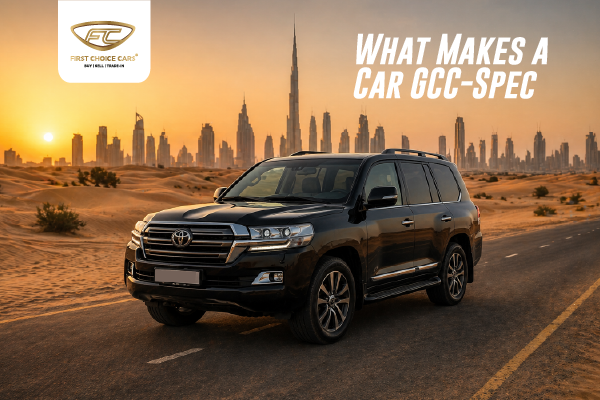
GCC-spec cars are apparently the same as non-GCC-imported cars but have slightly different specifications tailored to the region. The UAE's climate is harsh for vehicles, with extreme summer temperatures exceeding 50°C, high humidity, and dusty winds.
GCC-spec cars are equipped with region-specific features or enhancements such as a heat-resistant engine and components, strong AC/cooling systems, and better suspension and tyres. The following are some specific features of GCC-spec cars that make them a better choice for driving in the UAE:
1. Strong Air Conditioner / AC cooling
GCC-spec cars have a strong AC cooling system built for the driver and passengers' comfort during extreme hot summers. It's an essential feature to keep the cabin cool in scorching heat, which makes it preferable to standard imported versions.
2. Engine and Transmission Cooling Systems
The GCC-spec cars mostly have enhanced cooling systems to protect the engine and transmission from the UAE's extreme heat. These vehicles have high-capacity radiators, upgraded cooling fans, and heavy-duty condensers. In many cases, they also come with heat-resistant hoses and connectors. These upgrades prevent the engine from overheating, protect the transmission, and keep the cabin cool.
3. Enhanced Dust and Sand Filtration
In desert areas, accumulation of dust and sand can damage engines and lower a vehicle's performance. GCC-spec cars have advanced filtering systems to withstand severe conditions, guaranteeing peak performance during sandstorms.
4. Resistance to Corrosion
The UAE has high air humidity, leading to faster corrosion in vehicles and appliances. To overcome this issue, GCC-spec cars have improved corrosion-resistant materials and coatings. These materials are less prone to rusting, protecting metal components and increasing vehicle longevity.
5. Better Suspension and Tyres
The UAE has different types of roads, including city roads, motorways, off-road, and desert terrains. To drive in these diverse and challenging conditions, heat-rated tyres and heavier-duty suspension tunings are the common features of GCC-spec vehicles.
6. Fuel Compatibility
Fuel restrictions usually vary for each country. Vehicles made for the GCC market are calibrated to work efficiently with regional fuel quality and climate, ensuring enhanced engine durability and performance.
All these features make GCC-spec cars stand out in the United Arab Emirates. Buyers prefer these vehicles for their comfort and ease.
Major Benefits of Choosing a GCC-spec Car in the UAE
Choosing these cars in the UAE offers several practical benefits that directly impact reliability, maintenance, and long-term value. These reasons make them a safer and more dependable choice for most buyers, including:
1. Built to Meet UAE Regulations and Road Standards
A GCC-spec vehicle is designed to fulfil UAE regulations and road standards. It means that it already meets the country's criteria for lighting, emissions, safety, and general roadworthiness. As a result, GCC-spec vehicles may be easily registered and insured, and any dealership in the UAE can service them with the appropriate parts.
Non-GCC imports, on the other hand, are more likely to suffer during inspection, often require costly modifications, or may experience delays due to regulatory incompatibilities with the UAE.
2. Maintenance, Parts Availability & Lower Costs
Another significant benefit of GCC-spec cars is their maintenance. Local mechanics are well aware of the specifications of these vehicles, and spare parts are easily accessible throughout the United Arab Emirates. This ensures low-cost maintenance, reduces the likelihood of incompatibilities or using the wrong components, and shortens repair times.
On the contrary, non-GCC imports mostly have high maintenance costs because parts are not easily available. Sometimes, they need specific components that are not available in the local market, and it can take a long time to place an order and get them delivered. Also, these often cost more.
3. Strong Resale Value in the UAE Car Market
GCC-spec vehicles also have a much higher resale value in the UAE. Buyers usually trust them more because they adapt to the local climate, have transparent service histories, and come with fewer registration or insurance complications.
Contrary to this, non-GCC vehicles, especially those that were imported from the US or Japan, often make people worry about their hidden accident damage, exposure to floods, odometer tampering, or mechanical problems. This makes GCC-spec cars a better and more reliable choice in the UAE market.
4. Extended Warranties and Transparent Service History
Various dealers provide extended warranties for both new and used GCC-spec cars. Also, when you buy a used car, these often have a transparent service history, clearly showing if the car has been in any major accident or damage repair.
On the other hand, most of the dealers and manufacturers generally do not provide any warranties for imported/non-GCC spec cars in the UAE unless the warranty is international. Also, in most cases, they lack locally verifiable service records, and there's a tendency to reveal hidden damage later.
Key Differences Between GCC-Spec and Non-GCC Imports
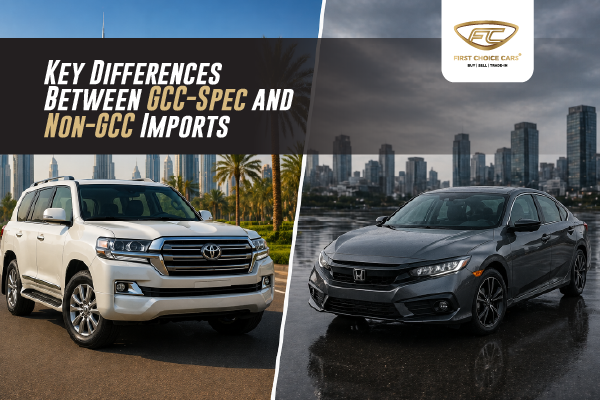
Clear from the above information that GCC-spec cars have many benefits over non-GCC cars in the UAE for their features and specifications. Here are the key differences:
| Category | GCC-Spec Cars | Non-GCC Cars |
|---|---|---|
| Cooling & A/C | Built with stronger radiators and powerful A/C to handle 45 to 50°C heat. | Have standard cooling, more likely to overheat or cool slowly in UAE summers. |
| Engine & Transmission | Tuned for high-temperature driving, long highways, and hot traffic conditions. | Designed for moderate climates; may struggle or wear out faster in UAE heat. |
| Suspension | Stronger suspension built for hotter and rougher conditions | Standard suspension optimised for varied or milder conditions |
| Dust & Sand Filtration | Better filtration and sealing for desert environments | Standard filters are prone to clogging in sandy conditions |
| Corrosion Protection | Additional corrosion-resistant materials for high humidity | Basic rust protection that is less effective against humidity and salt |
| Regulations & Compatibility | Fully compliant with UAE/GCC safety and emission standards | Modifications may be necessary to pass registration and inspection |
| Maintenance & Parts Availability | Parts are easy to find, and mechanics understand GCC specs | Some parts may be hard to source or incompatible |
| Resale Value | Higher resale because UAE buyers prefer GCC-spec vehicles | Lower resale in the UAE; many buyers avoid non-GCC imports |
Learning the key differences between GCC and non-GCC cars, including GCC vs American Car Specs, it's obvious that GCC-spec cars are better to buy in the UAE.
How to Confirm If a Car is Truly GCC-Spec
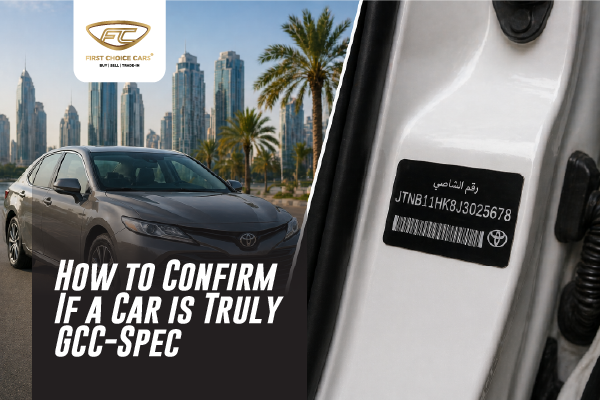
In the UAE, it's very important to ensure that the car you buy is GCC-spec, especially if you buy a used car. Here's how you can easily recognise cars with GCC specifications:
1. Check the VIN Number
Every car has a unique 17-digit code called the Vehicle Identification Number (VIN). It shows a vehicle's important information, like the country of manufacture. It has unique letters or numbers for every country. Check it and ask the dealer to verify the car's origin if you're not sure.
2. Examine Chassis Plate Details
Check the chassis plate, which is usually located on the car door or beneath the hood. The chassis plate on GCC autos frequently displays Arabic or specific GCC approval markings. This might be one of many indicators of GCC-spec cars.
3. Look for the GCC Compliance Sticker
GCC-spec cars often have specific GCC compliance marks with Arabic inscriptions, often found on the engine bay or door frame. Checking for these is a quick way to identify GCC certification.
4. Dealer Confirmation
Authorised dealerships should clearly state whether a vehicle is GCC or non-GCC spec. When you buy a used GCC car in the UAE, always request documentation before finalizing the deal to prevent any confusion later.
5. Inspect the Invoice
The car's GCC certification is generally demonstrated on the invoice when purchasing from a dealer. Ask the dealer directly if this information is missing.
Conclusion
A GCC-spec car is specifically designed to drive the challenging conditions of the UAE and other Gulf countries. It's a smart and practical decision that impacts your daily comfort, long-term dependability, and the amount of money you'll have to spend on car maintenance. So, it goes far beyond just preference. While buying a used car, make sure it is GCC-certified. Although non-GCC imports may look appealing due to their lower prices, many of them have hidden problems that become apparent when they face the extreme heat and driving conditions of the UAE.
Considering everything, purchasing a genuine GCC-spec car can ultimately save you a great deal of money, hassle, and stress. It's simply the safer and more reliable choice for UAE roads.
Disclaimer:All information, including pricing, vehicle details, and legal requirements, is accurate at the time of publication but may be subject to change due to market conditions or policy updates. While First Choice Cars makes every effort to ensure the accuracy of the information provided, we hold no responsibility for any errors, omissions, or outdated content. We recommend contacting our team directly to confirm the latest details before making any decisions.