
Keeping a used car in excellent condition is crucial for ensuring a smooth driving experience, increasing its lifespan, and preserving its value. Maintenance tips can help you optimise your vehicle's performance, save on costly repairs, and enhance safety on the road. First Choice Cars, a trusted platform for buying and selling used cars in the UAE, shares their commitment to quality used cars by offering genuine mileage, untampered kilometre readings, and intensive safety inspections.
Regularly Check and Change the Oil
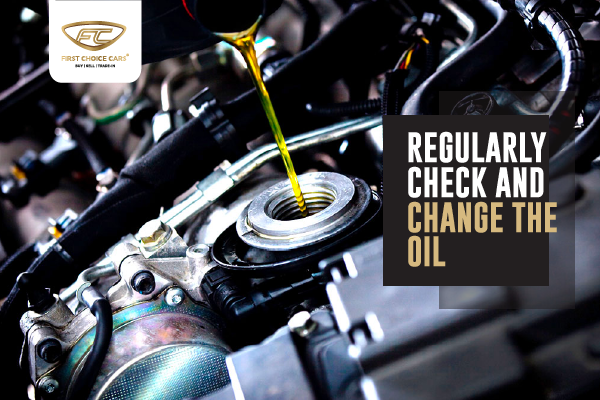
The health of your car's engine largely depends on regular oil changes. The oil lubricates the engine parts, reduces friction, and dissipates heat, preventing damage and wear and tear. Adhering to the recommended oil change intervals can significantly extend your engine's life and improve its performance.
Generally, it is advised to change your oil every 3,000 to 5,000 miles or every three months, depending on your car's make and model, as well as your driving habits. However, it is essential to consult your car's owner's manual for specific recommendations.
There are different types of engine oil, including conventional, synthetic, and semi-synthetic, with each type designed to cater to specific engine requirements. Choosing the right engine oil for your car is vital to ensuring optimal engine performance and longevity.
To check and change your car's oil, follow these steps:
- Ensure your car is parked on a level surface with the engine turned off and cooled down.
- Locate the oil dipstick and pull it out, wiping it clean with a cloth or paper towel.
- Reinsert the dipstick fully, then pull it out again to check the oil level. The oil should be between the minimum and maximum marks.
- If the oil level is low or appears dirty, it's time for an oil change. Consult your owner's manual for specific instructions on changing the oil and oil filter, or consider visiting a professional mechanic.
In addition to following these steps, keep track of your oil changes and other maintenance tasks with a log. This table provides a summary of the recommended oil change intervals for various types of engine oil:
| Type of Engine Oil | Recommended Oil Change Interval |
|---|---|
| Conventional Oil | Every 3,000 miles or 3 months |
| Synthetic Oil | Every 5,000 to 7,500 miles or 6 months |
| Semi-Synthetic Oil | Every 5,000 miles or 4 months |
Inspect and Replace the Air Filter
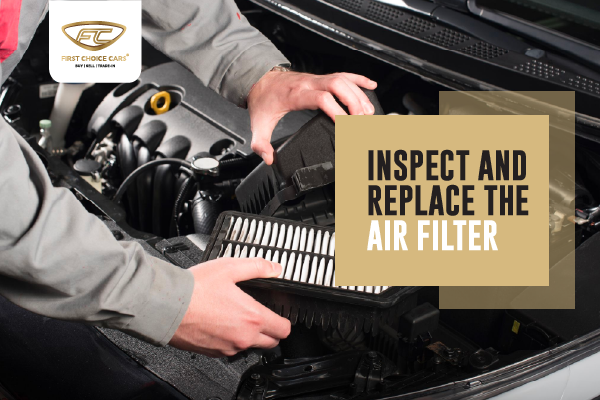
Air filters play a crucial role in maintaining your car's engine health and performance. They help keep dust, dirt, and debris from entering the engine, ensuring the air-fuel mixture is clean. Over time, air filters can become clogged and dirty, leading to reduced engine efficiency and increased emissions.
Knowing the signs of a dirty air filter can help determine when it's time for a replacement. These signs may include reduced fuel efficiency, poor acceleration, and a rough idle. Additionally, if you notice a dirty or foul smell coming from the air vents, it could be an indication that the air filter needs attention.
To inspect and replace the air filter, follow these steps:
- Locate your car's air filter housing, usually found under the hood near the engine.
- Consult your owner's manual for specific instructions on how to access the air filter.
- Remove the air filter and inspect it for dirt, debris, and damage. If it appears dirty or damaged, it's time for a replacement.
- Replace the air filter with a new one, ensuring it's the correct size and type for your vehicle.
- Reassemble the air filter housing and any other components that were removed during the process.
Following the recommended air filter replacement intervals is essential to keep your used car in top condition. Generally, air filters should be replaced every 12,000 to 15,000 miles or once a year. However, consult your owner's manual for specific recommendations based on your vehicle's make and model.
Here is a table summarizing the recommended air filter replacement intervals for various driving conditions:
| Driving Conditions | Recommended Air Filter Replacement Interval |
|---|---|
| Normal Conditions | Every 12,000 to 15,000 miles or 1 year |
| Dusty or Polluted Environments | Every 6,000 to 9,000 miles or 6 months |
Regularly inspecting and replacing your car's air filter ensures optimal engine performance and keeps your used car in top condition.
Keep Tyres Properly Inflated and Aligned
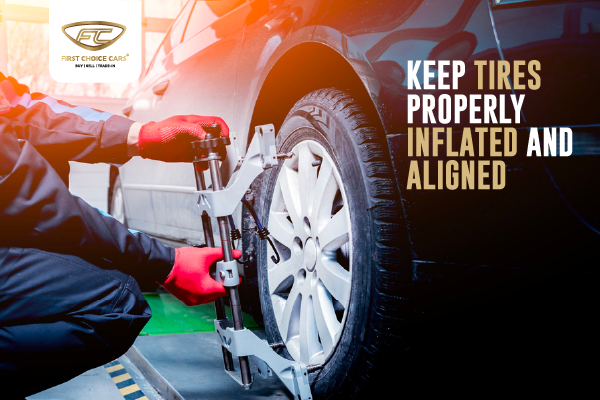
Ensuring that your tyres are properly inflated and aligned is essential for maintaining the performance, safety, and fuel efficiency of your used car. Properly inflated tyres not only provide a smoother ride but also help reduce tyre wear, extend their lifespan, and decrease the likelihood of a blowout.
To check your tyre pressure, you will need a tyre pressure gauge. Follow these steps:
- Make sure your tyres are cold, as driving can cause the tyres to heat up and affect the pressure readings.
- Locate the recommended tyre pressure levels in your owner's manual or on the sticker inside the driver's door.
- Remove the valve cap from the tyre and press the tyre pressure gauge onto the valve stem.
- Read the pressure on the gauge and compare it to the recommended levels. If necessary, add or remove air to achieve the proper pressure.
- Replace the valve cap and repeat the process for all four tyres.
As for tyre alignment, it ensures that your car drives straight and even, preventing uneven tyre wear and improving handling. It is essential to have your tyres professionally aligned if you notice any of the following signs:
- Your car pulls to one side while driving on a straight, level road.
- Your steering wheel is off-centre when driving straight.
- You notice uneven or rapid tyre wear.
- Your car's handling feels loose or unstable, especially when cornering.
Here is a table summarizing the recommended tyre pressure levels and professional tyre alignment intervals for various driving conditions:
| Driving Conditions | Recommended Tyre Pressure Levels | Professional Tyre Alignment Interval |
|---|---|---|
| Normal Conditions | Refer to the owner's manual or sticker inside the driver's door | Every 12,000 to 15,000 miles or 1 year |
| Rough or Uneven Roads | Refer to the owner's manual or sticker inside the driver's door | Every 6,000 to 9,000 miles or 6 months |
By keeping your tyres properly inflated and aligned, you can ensure optimal handling, safety, and fuel efficiency, contributing to the top condition of your used car.
Check and Replace Spark Plugs
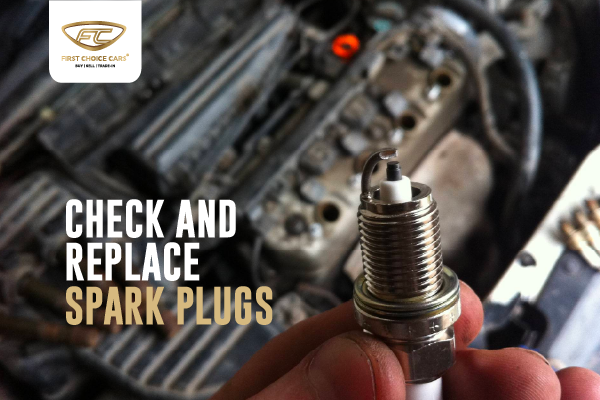
Spark plugs play a crucial role in your engine's performance, as they ignite the air-fuel mixture in the combustion chamber, enabling your car to start and run smoothly. Having fully functional spark plugs is essential for maintaining your used car in top condition.
Worn or faulty spark plugs can cause issues such as poor acceleration, reduced fuel efficiency, and engine misfires. By recognising the symptoms of worn spark plugs, you can address them early and prevent further damage to your engine.
To inspect and replace your spark plugs, follow these steps:
- Ensure your car is parked on a level surface with the engine turned off and cooled down.
- Consult your owner's manual for specific instructions on locating and accessing the spark plugs.
- Remove the spark plug wires or ignition coils, and use a spark plug socket to remove the spark plugs.
- Inspect the spark plugs for signs of wear, such as electrode erosion or carbon deposits. If they appear worn or damaged, it's time for a replacement.
- Install the new spark plugs, ensuring they are the correct type and properly gapped for your vehicle. Tighten the spark plugs to the manufacturer's recommended torque setting.
- Reconnect the spark plug wires or ignition coils and any other components that were removed during the process.
Following the recommended spark plug replacement intervals can help maintain optimal engine performance. Generally, copper spark plugs should be replaced every 20,000 to 30,000 miles, while platinum and iridium spark plugs can last up to 60,000 to 100,000 miles. However, consult your owner's manual for specific recommendations based on your vehicle's make and model.
Here is a table summarizing the recommended spark plug replacement intervals for various types of spark plugs:
| Type of Spark Plug | Recommended Replacement Interval |
|---|---|
| Copper Spark Plug | Every 20,000 to 30,000 miles |
| Platinum Spark Plug | Every 60,000 to 90,000 miles |
| Iridium Spark Plug | Every 80,000 to 100,000 miles |
By regularly checking and replacing your car's spark plugs, you can ensure optimal engine performance and keep your used car in top condition.
Follow the Recommended Maintenance Schedule
Adhering to your vehicle's recommended maintenance schedule is vital to keeping your used car in top condition. Regular maintenance ensures that your car runs efficiently, prevents costly repairs, and promotes safety on the road. By following the maintenance schedule, you can identify and address potential issues early, extending your car's life and preserving its value.
The maintenance schedule for your vehicle can be found in the owner's manual or on the manufacturer's website. It provides detailed information on the recommended intervals for various maintenance tasks, such as oil changes, tyre rotations, and inspections. The maintenance schedule is tailored to your car's specific make and model, ensuring optimal performance and reliability.
Examples of routine maintenance tasks include:
- Oil and oil filter changes
- Air filter replacement
- Tyre rotations and alignments
- Brake pad and fluid inspections
- Coolant flushes
- Transmission fluid changes
- Spark plug replacements
- Battery checks and replacements
At First Choice Cars, providing the highest quality used cars is their number one commitment. Each vehicle undergoes a rigorous safety inspection to ensure it meets our strict standards. By following the recommended maintenance schedule and incorporating the tips discussed in this article, you can
keep your used car in top condition and enjoy a smooth driving experience.
Here is a table summarizing the recommended intervals for some common maintenance tasks:
| Maintenance Task | Recommended Interval |
|---|---|
| Oil Change | Every 3,000 to 5,000 miles or 3 months |
| Air Filter Replacement | Every 12,000 to 15,000 miles or 1 year |
| Tyre Rotation | Every 6,000 to 8,000 miles or 6 months |
| Brake Pad Inspection | Every 12,000 miles or 1 year |
| Coolant Flush | Every 30,000 miles or 2 years |
| Transmission Fluid Change | Every 30,000 to 60,000 miles |
| Spark Plug Replacement | Every 20,000 to 100,000 miles, depending on the type |
| Battery Check and Replacement | Every 3 to 5 years |
Additional Maintenance Tips
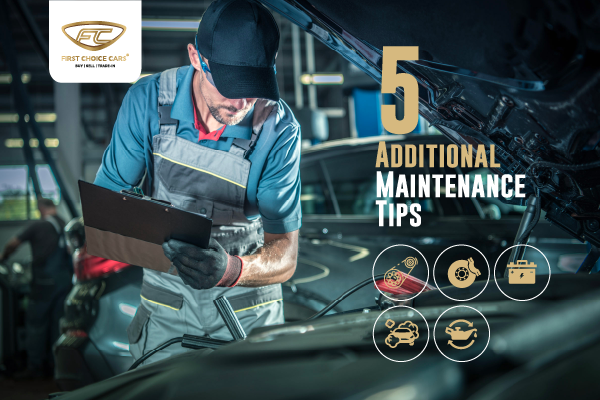
Beyond the essential maintenance tasks mentioned earlier, there are additional steps you can take to keep your used car in top condition. These include replacing the timing belt, inspecting and replacing brake pads, checking and replacing the battery, keeping the car clean and waxed, and regularly checking and topping up fluids.
1. Replacing the Timing Belt
The timing belt is a critical component of your engine, as it synchronizes the crankshaft and camshaft rotation, ensuring proper engine function. A worn or damaged timing belt can lead to engine failure and costly repairs. Generally, replacing the timing belt every 60,000 to 100,000 miles is recommended, but consult your owner's manual for specific recommendations based on your vehicle's make and model.
2. Inspecting and Replacing Brake Pads
Brake pads play a vital role in your car's safety, as they provide the necessary friction to stop your vehicle. Worn brake pads can decrease stopping efficiency and cause damage to other brake components. It is essential to inspect your brake pads regularly and replace them if they are worn or damaged. Generally, brake pads should be replaced every 30,000 to 70,000 miles, depending on your driving habits and the type of brake pads installed.
3. Checking and Replacing the Battery
Your car's battery is responsible for providing the electrical power needed to start and run your vehicle. A weak or dead battery can leave you stranded and cause damage to other electrical components. Regularly checking your battery's terminals for corrosion and ensuring they are clean can help prevent battery failure. Additionally, it is advised to replace your battery every 3 to 5 years, depending on your driving habits and the climate in your area.
4. Keeping the Car Clean and Waxed
Regularly washing and waxing your car not only keeps it looking great but also helps protect the paint and prevent rust. A clean car is less likely to suffer from paint damage and corrosion, ultimately preserving its value and appearance. Aim to wash your car every two weeks and wax it every three to four months to maintain its shine and protect the paint.
5. Regularly Checking and Topping Up Fluids
Keeping your car's fluids at the proper levels is essential for maintaining its performance and preventing damage. Regularly check and top up the engine oil, coolant, brake fluid, power steering fluid, and windshield washer fluid. Consult your owner's manual for specific fluid types and level recommendations based on your vehicle's make and model.
Here is a table summarizing the recommended intervals for some additional maintenance tasks:
| Maintenance Task | Recommended Interval |
|---|---|
| Timing Belt Replacement | Every 60,000 to 100,000 miles |
| Brake Pad Replacement | Every 30,000 to 70,000 miles |
| Battery Replacement | Every 3 to 5 years |
| Car Washing | Every 2 weeks |
| Car Waxing | Every 3 to 4 months |
By following these additional maintenance tips, you can further ensure that your used car remains in top condition, providing a safe and enjoyable driving experience.
Tabular Information on Maintenance Tips
This section provides an overview of the various maintenance tasks for keeping your used car in top condition. We present the information in a tabular format, which includes recommended intervals, expected costs, and comparative benefits of timely maintenance.
1. Maintenance tasks and their recommended intervals
Regular maintenance ensures your vehicle's performance, reliability, and safety. Here's a table summarizing the recommended intervals for common maintenance tasks:
| Maintenance Task | Recommended Interval |
|---|---|
| Oil Change | Every 3,000 to 5,000 miles or 3 months |
| Air Filter Replacement | Every 12,000 to 15,000 miles or 1 year |
| Tyre Rotation | Every 6,000 to 8,000 miles or 6 months |
| Brake Pad Inspection | Every 12,000 miles or 1 year |
| Coolant Flush | Every 30,000 miles or 2 years |
| Transmission Fluid Change | Every 30,000 to 60,000 miles |
| Spark Plug Replacement | Every 20,000 to 100,000 miles, depending on the type |
| Battery Check and Replacement | Every 3 to 5 years |
2. Expected costs for common maintenance tasks
Understanding the expected costs for common maintenance tasks can help you budget and plan for necessary vehicle upkeep. The table below outlines the approximate costs for various maintenance tasks:
| Maintenance Task | Approximate Cost (AED) |
|---|---|
| Oil Change | 90 to 275 AED |
| Air Filter Replacement | 55 to 220 AED |
| Tyre Rotation | 75 to 185 AED |
| Brake Pad Inspection | 185 to 550 AED |
| Coolant Flush | 185 to 550 AED |
| Transmission Fluid Change | 295 to 920 AED |
| Spark Plug Replacement | 145 to 735 AED (depending on type) |
| Battery Check and Replacement | 185 to 735 AED |
3. Comparative benefits of timely maintenance
Performing regular maintenance on your used car not only ensures optimal performance but also helps prevent costly repairs and promotes safety on the road. The table below highlights the comparative benefits of timely maintenance:
| Maintenance Task | Benefits |
|---|---|
| Oil Change | Improved engine performance, reduced wear, and increased lifespan |
| Air Filter Replacement | Enhanced fuel efficiency, reduced emissions, and improved engine performance |
| Tyre Rotation | Even tyre wear, extended tyre life, and improved handling |
| Brake Pad Inspection | Increased safety, reduced repair costs, and better braking performance |
| Coolant Flush | Prevents overheating, reduces wear on cooling system components, and improves engine performance |
| Transmission Fluid Change | Extended transmission life, smoother shifting, and reduced wear on transmission components |
| Spark Plug Replacement | Improved fuel efficiency, smoother engine operation, and reduced emissions |
| Battery Check and Replacement | Reliable vehicle starting, reduced risk of electrical component damage, and increased battery life |
By incorporating the maintenance tips and following the recommended intervals outlined in this article, you can keep your used car in top condition, ensuring a safe and enjoyable driving experience.
Auto Loans and Financing Options
When purchasing a used car, it's essential to consider the available financing options to make the process more manageable. First Choice Cars partners with leading UAE banks to offer auto loans, making it easier for you to own the car of your dreams. This section will discuss how to apply for an auto loan and the factors to consider when choosing a financing option.
1. First Choice Cars' Partnerships with Leading UAE Banks
First Choice Cars has established partnerships with leading UAE banks to provide customers with flexible and competitive auto loan options. These partnerships enable customers to find the most suitable financing solution for their needs, ensuring a seamless buying experience.
2. How to Apply for an Auto Loan
Applying for an auto loan is a straightforward process. First, research and compare the available financing options from various banks, considering factors such as interest rates, loan terms, and eligibility requirements. Once you have identified the most suitable option, gather the necessary documentation, such as proof of income, identification, and vehicle details. Finally, submit your application to the bank, either online or in person, and wait for their response. The bank will assess your creditworthiness and determine if you qualify for the loan.
3. Factors to Consider When Choosing a Financing Option
When selecting a financing option for your used car, it's essential to consider several factors to ensure you make the best decision. These factors include:
- Interest rates: Compare the interest rates offered by different banks to find the most cost-effective option.
- Loan terms: Consider the loan term and monthly payment options to ensure they align with your financial situation.
- Eligibility criteria: Ensure you meet the bank's eligibility requirements before applying for a loan.
- Processing time: Ask your bank how long approval usually takes, so a delay does not hold up your used car purchase.
- Additional fees: Be aware of any additional fees or charges associated with the loan, such as processing fees, early repayment fees, or late payment penalties.
Considering these factors, you can select the most suitable financing option for your used car purchase, ensuring a smooth and hassle-free buying experience. Visit First Choice Cars at www.firstchoicecars.com to explore their inventory of quality used cars and learn more about the available financing options.
Maintaining Your Car's Prime
By regularly following the maintenance tips discussed in this article, you can ensure your used car stays in top condition, providing a safe and enjoyable driving experience. First Choice Cars commits to quality by offering genuine mileage, untampered kilometre readings, and intensive safety inspections on each vehicle.
Explore First Choice Cars' inventory of quality used cars and learn about their auto loans in partnership with leading UAE banks. Visit www.firstchoicecars.com and find your perfect car today!
Disclaimer:All information, including pricing, vehicle details, and legal requirements, is accurate at the time of publication but may be subject to change due to market conditions or policy updates. While First Choice Cars makes every effort to ensure the accuracy of the information provided, we hold no responsibility for any errors, omissions, or outdated content. We recommend contacting our team directly to confirm the latest details before making any decisions.